
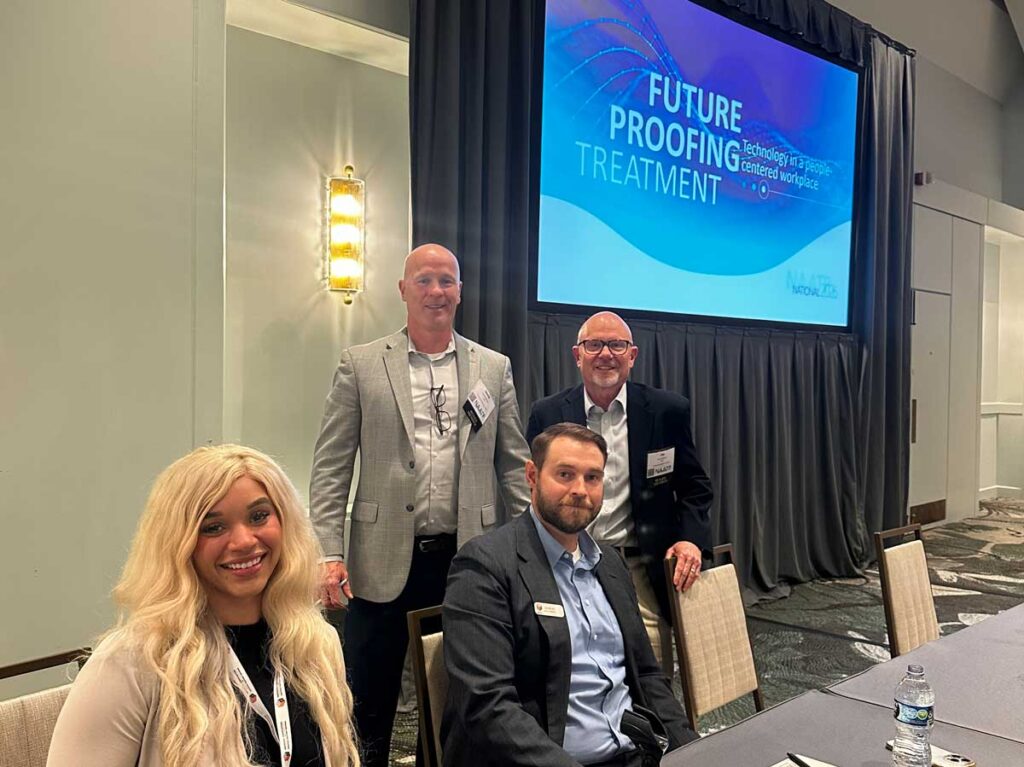
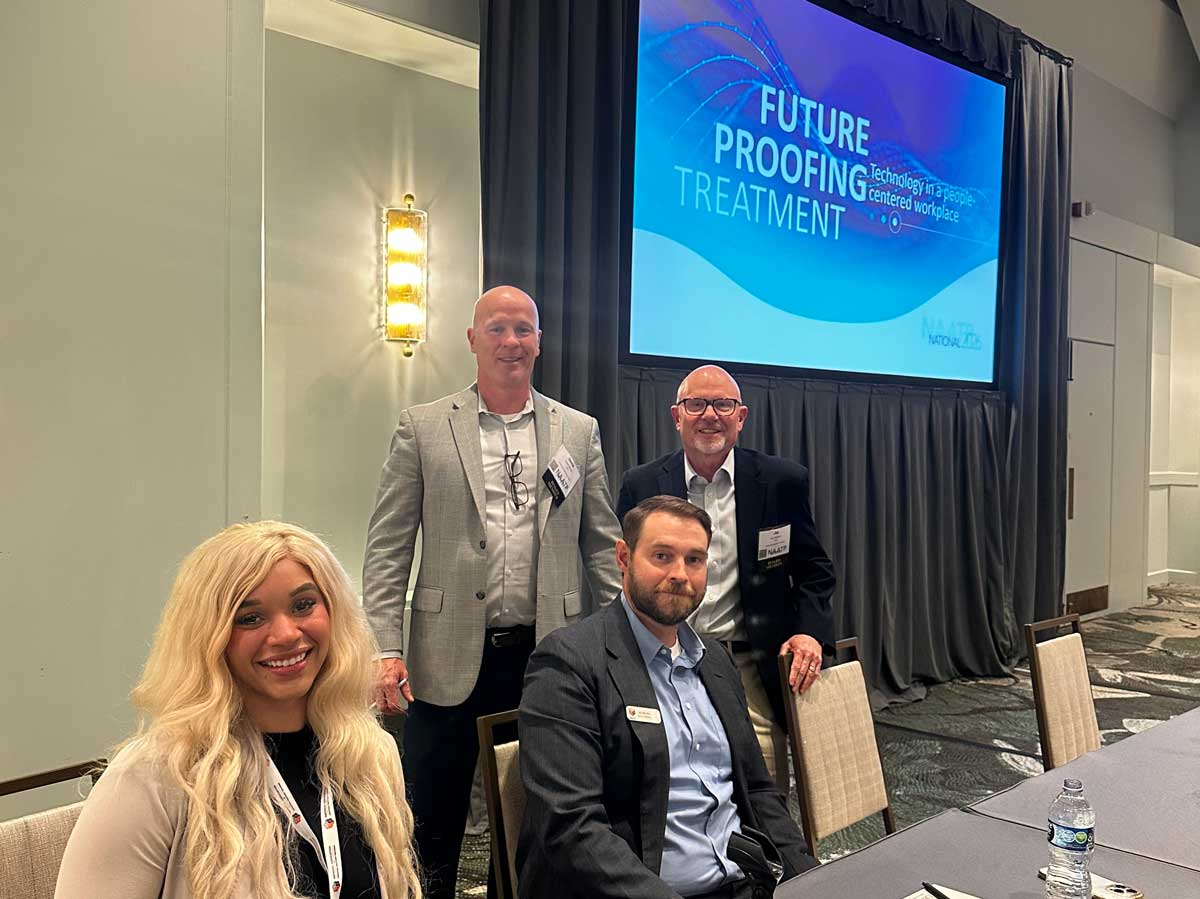
Last week, the LegitScript team joined more than 600 substance use disorder (SUD) executives, clinicians, marketers, and behavioral health leaders at NAATP National 2026 in Amelia Island, Florida. The conference theme, Future-Proofing Treatment: Technology in a People-Centered Workplace, set the tone for three days of candid, forward-looking conversations about where SUD field is headed and what it's going to take to get there responsibly.
Here are the themes that resonated most.
Stop Optimizing the Present. Start Building the Future.
One of the most compelling ideas woven throughout the conference was the distinction between "present-forward" and "future-back" thinking.
Present-forward thinking is where most organizations live: optimizing current workflows, making incremental improvements, managing day-to-day operations. It's necessary but it's not sufficient. Future-back thinking asks a harder question: What do we want to be in five or ten years, and what do we need to build today to get there?
Session after session reinforced the same message. Organizations that only focus on optimizing the present risk becoming obsolete as care models, technology, and patient needs shift rapidly beneath them. The future-back approach starts by baselining where you are, understanding where the ecosystem is headed, and working backward from a clearly defined future-state vision.
This framing wasn't just theoretical. It showed up directly in conversations about AI adoption, workforce development, and patient engagement, which are all areas where the gap between where the industry is today and where it needs to be is widest.
AI Adoption Is the Hard Part
The industry has largely moved past the question of whether AI has a role in behavioral healthcare. The harder conversation is how to actually get people to use it.
Many organizations have invested in AI tools. Fewer have figured out how to integrate them into daily workflows in ways that stick. Speakers were candid about the obstacles: organizational readiness, workforce trust, change management, governance structures, and the cultural lift required to make AI feel like a partner rather than a threat.
The consensus was clear: successful AI implementation isn't a technology problem. It's a people problem. Deploying a tool is the easy part. Building the organizational culture and operational alignment to support it is the work.
The Professionals Who Use AI Will Lead
One of the standout quotes of the conference:
"Many professionals in this field can't be replaced, but those who use AI will replace those who don't."
This framing helped shift the conversation away from fear and toward agency. AI isn't coming for clinicians, case managers, or treatment specialists. The human judgment, empathy, and clinical expertise that define quality care aren't things a model can replicate. But AI-enabled organizations and workers will have real operational and strategic advantages. Some examples where these advantages might be a differentiator include documentation, intake and triage support, patient engagement, compliance monitoring, and beyond.
The message wasn't "adapt or die." It was more useful than that. Professionals and organizations that lean into AI thoughtfully will be positioned to do better work, serve more people, and build more sustainable operations.
Ethical AI Starts With Ethical Data
This was one of the most important conversations of the conference, and one where the behavioral health and SUD field has a lot of work ahead.
One line captured it well:
"If there's bias in the world, there's bias in our data."
AI systems learn from historical data— meaning they can inherit and amplify existing inequities if organizations aren't deliberate about governance. Sessions highlighted the real risk of AI systems that unintentionally reinforce healthcare disparities, discriminatory decision-making, or biased assumptions about who deserves access to care.
The ask for organizations was straightforward: don't just implement AI. Implement it responsibly. That means establishing transparent governance structures, building in human oversight, setting data quality standards, and creating accountability mechanisms that keep patient safety and fairness at the center.
LegitScript at NAATP: Ethics and the Future of Online Marketing
I was proud to represent LegitScript as a panelist in Session 1A: Ethics and the Fluctuating Landscape of Online Marketing, moderated by David Gomel, PhD, CEO of Rosecrance Behavioral Health, alongside Peter Thomas of NAATP and Jay Crosson, CEO of Cumberland Heights Treatment Center.
The session dove into one of the more persistent challenges in the SUD space: the gap between what ethical online marketing looks like in principle and what's actually happening in practice.
What We Covered
The panel explored the evolving expectations for treatment providers operating in digital advertising environments including, what transparency actually requires, how organizations can protect their brands from deceptive practices by bad actors, and what reporting and enforcement pathways exist when things go wrong.

A significant part of the conversation centered on LegitScript's Addiction Treatment Certification program, which launched in 2018 in response to growing concerns about harmful and misleading practices in the industry. The program was built to increase transparency, establish compliance standards, and support compliant providers to advertise responsibly to ultimately help create safer pathways for people seeking care.
Standard 13: A Meaningful Step Forward
One area of focus was the introduction of Standard 13 – Advertising in 2023, which required certified providers to advertise transparently. One critical detail of this standard included no longer using third-party business names in ads. The goal was straightforward: reduce the misleading practices where providers were using competitors' names to capture patients who weren't looking for them.
A key takeaway from reviewing the data: a relatively small number of non-transparent advertisers can have an outsized negative impact across the entire treatment ecosystem. That's worth sitting with. The bad actors are not the majority, but their behavior shapes public trust in ways that affect everyone.
Reporting and Collaboration
The panel also highlighted LegitScript's "Report a Website" feature, which allows providers and stakeholders to flag potentially harmful behavior, misleading advertising, and transparency concerns. Effective enforcement in this space doesn't happen in isolation. It depends on the whole ecosystem paying attention and speaking up.
One important nuance the panel addressed directly: LegitScript can only enforce standards against organizations participating in its certification program. We're an independent third-party compliance organization, not a regulator. That limitation matters, and it reinforces why industry-wide collaboration is so essential.
Naomi's Closing Thought
The session started to come to a close with my reminder that whether it’s compliance work, ongoing monitoring oversight, or Certification Standards, none of it is abstract. It's about real people.
"We are real people working at LegitScript, and we care deeply about the work that we do. We care about the industries and communities we support. We care about the harm caused in these communities, and we care about helping prevent it and making a real difference."
I closed the panel with an African proverb from a collection authored by my father, who was born in Zambia:
"If you want to go fast, go alone. If you want to go far, go together."
It's a fitting final note and not just for the panel, but for the conference as a whole. The future of behavioral healthcare and SUD won't be built by any single organization working in isolation. It will be built by people who show up, collaborate honestly, and hold the line on doing things the right way.
We're glad to be in that work with you.

LegitScript's Addiction Treatment Certification program helps compliant providers advertise responsibly on major digital platforms.