
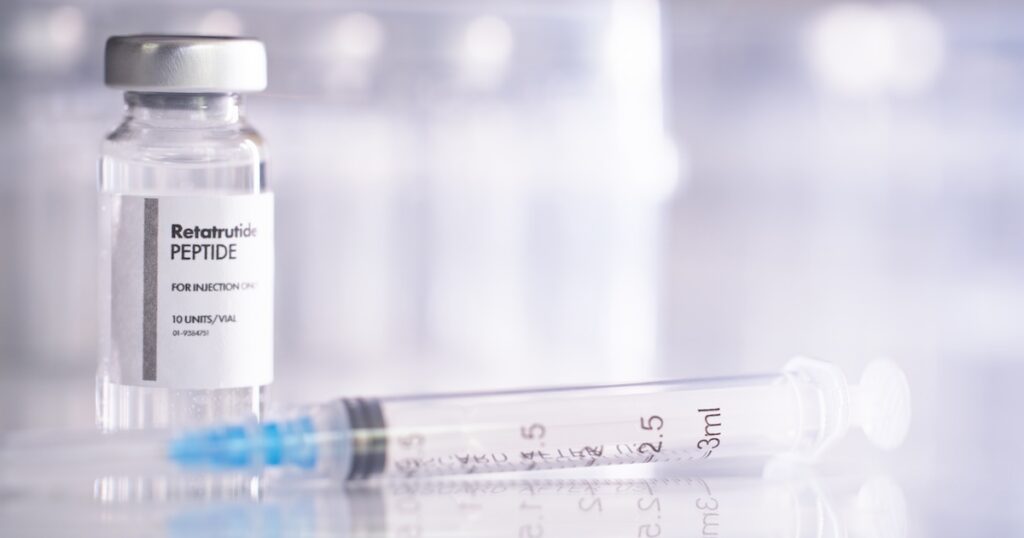
Peptides are having a moment. Scroll through social media or a wellness clinic's website, and you're likely to come across names like retatrutide, BPC-157, TB-500, Injectable GHK-Cu, MOTs-C, CJC-1295, Ipamorelin, Semax, Selank, Tesamorelin and Cagrilintide, with sellers marketing claims ranging from weight loss to faster injury recovery. Demand is surging in the United States, and so is the number of businesses looking to offer these products.
There’s just one problem: Many of the most popular peptides on the market today are not currently permissible under the existing FDA regulatory framework, no matter how widely they’re being sold or advertised.
September 22, 2026 | by Naomi Moono
This post breaks down where these substances actually stand today, how a peptide moves from impermissible to permissible (and how far that process really is from complete for some of these popular substances), and what all of this means for LegitScript-certified businesses operating within the US.
Where These Peptides Actually Stand Today
Not every impermissible peptide is in exactly the same position. Some, like BPC-157, TB-500, and several others, were recently reviewed by the FDA’s Pharmacy Compounding Advisory Committee (PCAC), which recommended six of seven substances under review for potential inclusion on the Section 503A Bulk Drug Substances List.
We covered this meeting in detail in our previous post, including what the committee reviewed, what the vote actually means, and what happens next in the regulatory process.
Others, like retatrutide and cagrilintide, remain investigational drugs still in clinical trials and haven’t gone through that advisory process at all.
Regardless of where these popular peptides fall within that process, whether it’s investigational, or recently reviewed by PCAC, the substances named above (retatrutide, BPC-157, TB-500, and cagrilintide) are not currently eligible for compounding, sale, or use under the regulatory framework that governs them within the United States today.
For a peptide to become eligible for compounding, it generally needs to meet one of a few specific criteria: being included on the Section 503A Bulk Drug Substances List, being the subject of an applicable USP or National Formulary monograph, or being a component of an FDA-approved drug product. It’s important to note that these criteria apply specifically to 503A pharmacies. Even if a peptide meets one of these thresholds, 503B outsourcing facilities remain separately restricted, and can only compound that substance if it’s specifically included on Category 1 of the 503B Bulks List. None of the peptides discussed here currently meet the applicable thresholds for either pathway.
It’s also worth understanding that even a favorable PCAC recommendation is just one early step in a much longer process. An advisory committee recommendation doesn’t authorize compounding and doesn’t change the law. If the FDA decides to move forward, it would typically publish a Notice of Proposed Rulemaking, followed by a public comment period, before any final rule could take effect. Only a final rule actually changes the regulatory status of a substance. Until that happens, the current rules apply, not the recommendations.
What This Means for LegitScript Certification
LegitScript’s Certification Standards are built on applicable laws and regulations, not on where the industry hopes those regulations might be headed. Because these peptides are not currently permissible under existing law, certified customers are not permitted to engage with them in ways that violate that framework.
This applies more broadly than many businesses realize. Violations aren’t limited to actually dispensing or prescribing an impermissible peptide. They also include offering the product, promoting it, or advertising it. Partnering with a separate entity that dispenses or prescribes these substances on your business’s behalf, or as part of the continuum of care, doesn’t provide a workaround either. If a certified business is connected to that activity, whether directly or through a partner, it will still create a certification concern.
Efficacy claims are another area where businesses commonly run into trouble. Making claims about a peptide’s safety or effectiveness, especially when those substances haven’t been proven safe or effective for the uses being promoted, is a serious compliance issue on its own, separate from whether the product is actually being sold.
Educational Content vs. Promotional Content
Educational vs. promotional content is one of the more nuanced areas businesses are grappling with right now, and one we’re seeing come up more frequently: the line between educating an audience about a substance and its regulatory status and promoting its use.
Content that could reasonably be considered promotional, meaning it encourages the use of an unapproved drug, is impermissible under LegitScript’s Transparency Standard, regardless of whether the business actually offers the product. Educational or informational content, on the other hand, is generally permitted.
A few signals that content has crossed into promotional territory:
- Making claims about a peptide’s efficacy or safety, particularly when compared to FDA-approved medications
- Providing dosing recommendations for an unapproved drug
- Describing specific treatment benefits (for example, claiming a peptide “repairs” or “heals” a specific condition)
- Referring to a substance as “clinically proven” or “scientifically backed” without clear disclosures that most available research hasn’t been conducted in humans, and existing studies are too limited to establish real-world safety or effectiveness
- Implying or stating that a substance is FDA-approved or otherwise legally permitted for compounding
- Including a call to action inviting readers to reach out for more information about obtaining or using the product, unless the content clearly discloses the product is not approved and not available for sale or prescription
By contrast, informational content stays factual and balanced. It might describe what a substance is, its regulatory history, or areas of ongoing research, but it doesn’t recommend using the substance for a particular outcome, and it clearly discloses that the product is unapproved and unproven. Purely factual reporting, like coverage of a PCAC meeting or a regulatory update, generally doesn’t require these disclaimers, as long as it sticks to reporting the development itself rather than promoting the substance.
The clearest way to evaluate content is to ask a simple question: Is this primarily helping a reader understand a substance and the evidence around it, or is it ultimately giving that reader a reason to want, seek out, or use the product? Content that does the latter, however subtly, tends to cross the line.
Looking at the Future of Peptides
The regulatory landscape around compounded peptides isn’t static, and we don’t expect it to stay this way indefinitely. If the FDA moves forward with formal rulemaking to make any of these substances permissible, LegitScript will evaluate those changes closely and update our certification review processes accordingly. Until that happens, our Certification Standards will continue to reflect the regulatory requirements that are actually in effect today, not where those requirements may eventually land.
LegitScript Certification customers are required to operate in full alignment with LegitScript’s Certification Standards and Terms and Conditions. Businesses found to be in violation, whether through offering, promoting, or making impermissible claims about impermissible substances, will be subject to enforcement action.
At its core, the LegitScript Certification Seal is meant to convey one thing clearly: when a patient sees it, they know they’ve found a business they can trust. That trust is built by businesses that choose to operate compliantly and in alignment with applicable laws and regulations, regardless of what the rest of the industry may be doing. We’re proud to support a community of businesses committed to that standard, and we take seriously our role in helping protect it.