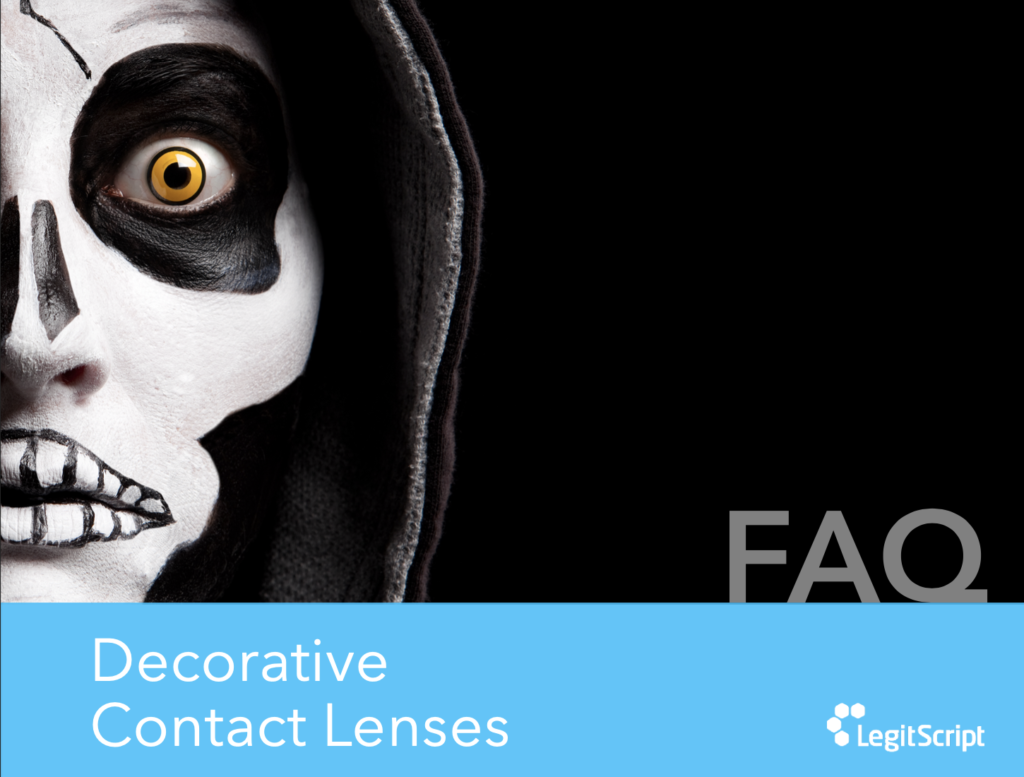


In early fall, it's prime season for merchants selling Halloween costumes, theatrical makeup, and, increasingly, decorative contact lenses. Since these contact lenses typically have no vision-correction purposes, consumers and payment facilitators alike may not realize they are products regulated by the Food and Drug Administration (FDA) that pose real risks if used improperly.
Also called theatrical or fashion lenses, decorative contact lenses change the look of a user's eyes - such as snake eyes or "zombie eyes" - but typically do not correct vision. These types of lenses are especially popular around Halloween, but with an increase in costume-oriented activities such as Comic-Con and cosplay (costume play) events, decorative contact lenses are becoming increasingly popular year-round.
The FDA designates most of these lenses as Class II medical devices because they pose a moderate risk to patient health when used without appropriate physician oversight. Improper use and maintenance of contact lenses can lead to severe eye problems such as corneal abrasion, allergic reaction, infection, decreased vision, and even blindness. Many consumers and payment facilitators alike may not realize they are products regulated by the FDA and require a prescription.
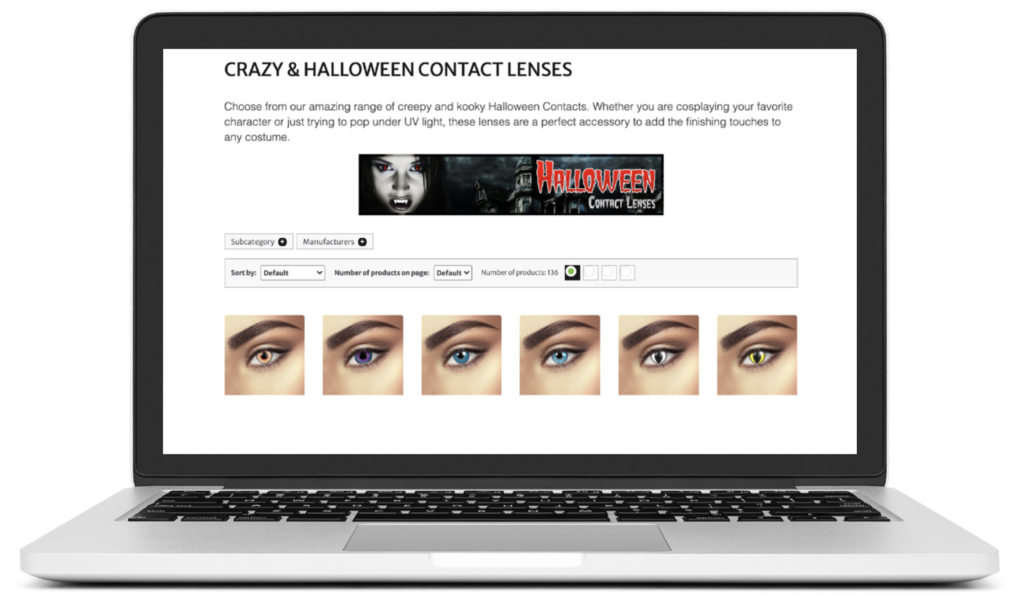
This website selling decorative contact lenses allows users to check out without asking for a prescription.
Many brands of decorative contact lenses are sold online, but not all have received FDA approval or clearance. Before medical devices (including contact lenses) can be sold in the US, the FDA reviews the marketing application or premarket notification from medical device companies to determine whether the companies can release the device into the marketplace.
Payment facilitators can search the FDA's medical device databases to get information about FDA-approved contact lens brands and manufacturers. They can also search the FDA's warning letters and import alerts to see if a brand or manufacturer has been identified as unauthorized or problematic.
What to Watch Out For
-
- Merchants selling decorative contact lenses without requiring a prescription
-
- Merchants selling decorative contact lenses to the US from overseas
-
- Websites that accept payment and process orders prior to prescription validation
Want to learn more? Download our Decorative Contact Lenses FAQ.