
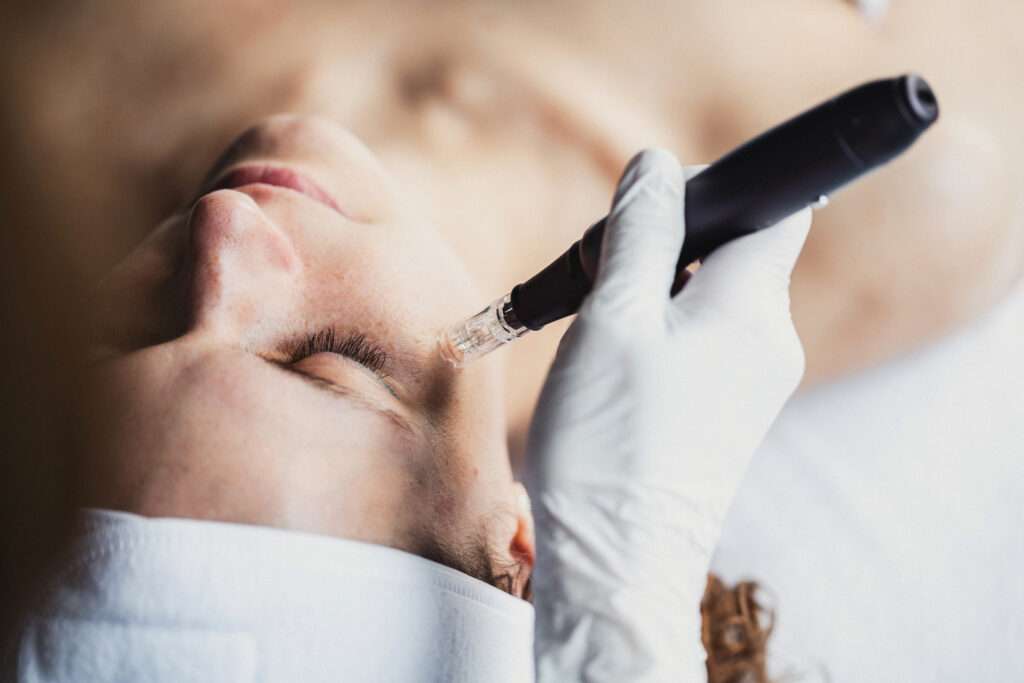
Women seeking hormone therapy, weight loss support, med spa services/medical aesthetics, and menopause/perimenopause care have more choices than ever. What's less clear is how to evaluate them. Here's a framework that most patients don't know exists.
When you book a Botox appointment, start a GLP-1 weight loss program, or interact with a hormone clinic (either in person or virtually), there's a set of questions you probably don't think to ask. Is the person injecting you licensed to do so in this state? Is the medication you're receiving sourced from a credible supplier? Has this clinic ever had a regulatory action taken against it? Is the pharmacy filling your prescription actually verified to do so?
Most women don't ask these questions. Not because they're careless, but because they have no reason to think they need to. We book a facial without demanding to see an aesthetician's license. We receive a prescription without investigating the pharmacy's accreditation history. We assume, reasonably, that if a business is operating, someone has already checked that it's doing so legitimately.
That assumption is safe enough for most industries. Unfortunately, in the rapidly growing world of women's health services, including med spas, hormone therapy, perimenopause and menopause care, and medically supervised weight loss, it increasingly is not. Bad actors exist in every industry, and their motivation is simple: boost your bottom line by cutting a few corners.
Sometimes these behaviors are malicious and sometimes they’re not. Take medications for example. A provider may simply think they’re saving on the medications they’re prescribing by switching pharmacies. Unbeknownst to them, the pharmacy saving them money is doing so because the medications are counterfeit or are drastically different formulaically from the FDA-approved versions. It’s really difficult for both operators and patients to distinguish the difference between partners and providers following rigorous medical standards and ones that simply look like they do.
That's the awareness gap LegitScript Healthcare Certification is designed to close.
The Question You Didn't Know You Could Ask
Here is something most consumers of med spa and women's wellness services don't know: there is an independent certification standard for healthcare providers in these categories, and it is possible, right now, to look up whether your provider has earned it.
LegitScript Healthcare Certification is a methodical, independent compliance review that verifies whether businesses such as medical spas, hormone clinics, weight loss providers, or telehealth practices are operating to a documented regulatory standard. It is not self-reported. It is not a membership that any business can purchase. It requires a detailed application, independent document review, credential verification, affiliate investigation, and ongoing compliance monitoring to maintain.
The businesses that earn it have demonstrated, to an independent third party, that their practitioners are properly licensed, their medications are legally sourced, their advertising claims are accurate, their patient privacy practices comply with applicable law, and their partners are operating compliantly.
Most women making decisions about their health have never heard of this standard. That is not their failure. It's an industry awareness gap. The seal exists. What's needed now is for patients to know to look for it.
What's Actually Being Verified and Why It's Not Obvious
Understanding what the LegitScript seal means requires understanding what it's actually checking. The healthcare certification process evaluates providers across nine independently assessed standards. For operators and patients in the women's health space, the most consequential of these are:
Who is actually treating you
Every licensed professional providing services at a certified facility must be credentialed and verified, including physicians, nurse practitioners, physician assistants, nurses, and any other medical staff. This includes DEA registration for facilities and providers prescribing controlled substances and, where required, medical spa-specific state licensing. A patient walking into a LegitScript-certified clinic can know that the people treating her have been verified to hold the credentials they claim.
Why does this matter? Because in 2024, the FDA arrested the owner of a Massachusetts medical spa who had performed more than 2,700 counterfeit Botox, Sculptra and Juvederm injections over three years while representing herself to patients as a nurse. She was an aesthetician with no license to administer prescription drugs or devices.1 Her patients had no way to know that from the outside. They trusted her and not through any failure of judgment on their part. But because they didn't know they had a way to verify.
Where your medications are actually coming from
For certified providers, partner pharmacies must be LegitScript-certified or accredited by the National Association of Boards of Pharmacy. Compounded medications, which are increasingly common in hormone therapy and GLP-1 weight loss programs, are subject to specific scrutiny. A certified provider cannot source medications from suppliers that are not operating compliantly..
This matters more than most patients realize. In early 2025, the FBI issued a formal public warning specifically targeting weight loss clinics and medical spas for fraudulent compounding practices—misrepresenting what was in compounded medications and where they came from.2 The patients receiving those medications had no idea. They assumed their provider was sourcing responsibly. Certification makes that assumption verifiable.
Whether the advertising matches reality
One of the most pervasive problems in women's health services is the gap between what providers claim and what they can substantiate. LegitScript's certification standards require that all advertising claims are consistent with FDA and FTC guidelines with a specific scrutiny applied to hormone replacement therapy, GLP-1 medications, NAD+, and other high-demand treatments that attract aggressive and sometimes misleading marketing.
In July 2025, the FTC reached a settlement with a telehealth weight loss company that had exploited patient interest in GLP-1 medications to sell programs built on undisclosed costs, fabricated testimonials, and unsubstantiated weight loss claims.3 The patients who enrolled didn't know the testimonials were fake. They didn't know what they were actually signing up to pay. Certification doesn't just protect against unlicensed providers. It protects against the more common and subtler problem of providers who are technically licensed but operating deceptively.
The Standard You Didn't Know to Expect
One of the most important things to understand about LegitScript Healthcare Certification is what it signals beyond the individual checklist items. Providers do not have to obtain it. Certification becomes critical only when a provider wants to advertise on major search engines and social media platforms, or process card-not-present transactions for prescription medication. For example, if your local med spa doesn’t advertise, but does offer a botox subscription service that charges your card when you're not in the facility, they may need certification.
For patients, knowing this certification exists is useful even if your current provider isn't certified. It gives you a framework to ask your provider whether they've pursued LegitScript certification, or whether their partner pharmacy is LegitScript-certified or NABP-accredited. You can look up a provider before booking. You can make the certification seal one of the criteria you use when choosing between options. The standard exists whether or not your provider has been required to meet it, and knowing it exists changes the questions you're able to ask.
This is the analogy we find most useful: B Corp certification doesn't mean a company is perfect. It means their values and practices have been independently verified against a defined standard, and that they've committed to maintaining that standard over time. Consumers who care about how a company operates have learned to look for the B Corp seal because it means something specific, verifiable, and not just a marketing claim. The LegitScript seal in healthcare works the same way. It is not a guarantee of a perfect outcome. Medicine never is. It is a verified signal that a provider has met an independent compliance standard across the areas that matter most: practitioner credentials, medication sourcing, advertising accuracy, patient privacy, and regulatory history.
The women seeking these services deserve a way to identify the providers who have earned their trust — not just assumed it. The LegitScript seal is that signal.
For Operators: Why This Moment Matters
The women's health market is experiencing an intensifying level of regulatory scrutiny from the FTC, FDA, FBI and state medical boards. The providers who can demonstrate that their compliance posture is documented and independently verified are in a fundamentally different position from those who cannot.
But beyond the regulatory dimension, there is a deeper opportunity here. Patients in this space are actively looking for providers they can trust. The awareness gap is real, but it is closing. As more women learn that an independent certification standard exists, the providers who have earned it will have a clear and credible advantage in a market where trust is the primary purchase driver.
Certification is not a compliance burden for operators who are already doing things right. It is a way to make their standards visible to patients who are ready to ask better questions and as a growth driver for operators looking to expand their advertising reach or CNP service offerings.
Now You Know What to Look For
When you're choosing a hormone clinic, a medical spa, a weight loss provider, or a perimenopause specialist, you can ask whether they're LegitScript certified. You can look it up. And you can choose providers who have had their standards independently verified.
That's not a small thing. For years, the framework for evaluating these providers simply didn't exist for most patients. Now it does.
For patients reading this blog and want to verify if their provider is certified, we offer a free public look up tool at https://www.legitscript.com/websites/.