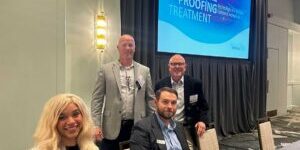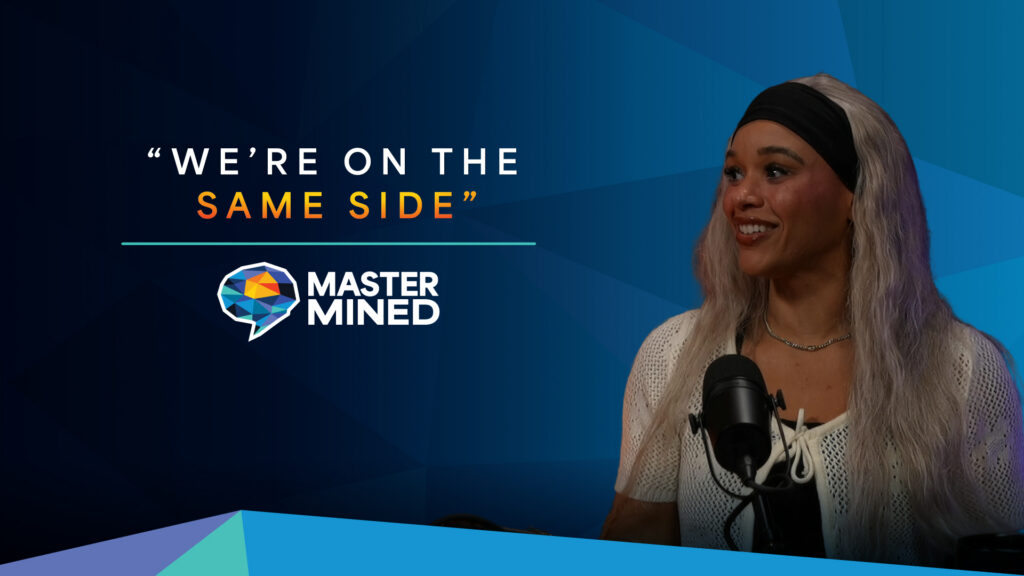
Naomi Moono, Director of Strategy and Certification at LegitScript, joined the MasterMined Podcast at the Behavioral Health Tech Conference in Nashville to answer the questions providers bring to us. Who does LegitScript answer to? How does it make calls in the gray areas? Why do reviewer inquiries sometimes feel like an interrogation, and is that changing?
Naomi answers these directly. She explains what the seal does and doesn’t represent, why seeing one on a website is no longer enough and how to verify that it’s real, and what happens when someone reports a facility. She also covers the shift toward supporting good actors rather than just policing bad ones, expedited certification paths, the mistakes she sees with AI-generated content, and where certification is headed. Listen to the full conversation below, or follow along with the transcript.
Naomi (LegitScript)
We are on the same side if you are a legitimate good actor. And that doesn't mean that you're doing every single... Like, people, you might not have known that claim. We understand that. You might have a claim on your website, and we're not coming from this from the perspective of you intentionally put that claim to mislead consumers.
No. Not at all. And so that is something that we really have a focus on within our own internal, you know, terminology. When we're reaching out about something, we'll say language like, it appears or it seems because we don't wanna be accusatory, and we we don't want people to be afraid of us. If are a legitimate good actor, we're on the same side. We want to support you.
Mark (MasterMined)
If you run a behavioral health organization right now, the biggest gate on your growth is not the payer. It's a certification.
You pay per facility every year for the right to buy an ad. A private company, nobody elected, writes the rules. The seal itself is getting easy to copy. Today's guest runs the other side of that gate. She sets the strategy for certification. This spring, she sat on the ethics panel at the industry's national conference. Last week, she wrote that the seal can no longer be trusted on-site.
That last one is where we start.
Welcome back to Mastermind. I'm your host Mark Scrivner and as always joined by my fabulous cohost, Jeff Skill and Jeff. Welcome to the show, man.

Jeff (MasterMined)
Mark, you know, when I talk to people and ask them who they would like to have on, this one comes up a lot
Mark (MasterMined)
Yeah.
Jeff (MasterMined)
Actually. And so I'm super thrilled and excited about what we're gonna do today.
Mark (MasterMined)
Yeah. We have had a lot of requests for this show. So today we're joined by Naomi Mono, director of strategy and certification at Legit Script. Naomi, welcome to the show. It's so great to have you here.
Naomi (LegitScript)
I'm excited to be here. I'm with some celebrities. I'm excited to get into it.
Mark (MasterMined)
Thanks for taking time away. You were at the BH Tech Conference here in Nashville and stepped away to come over to our fabulous studio and Happy to. Do this. So thank you. I'm looking forward to it.
Jeff (MasterMined)
So, Naomi, we're talking to somebody who is at LegitScript. And so I'm curious.
When we... When you say LegitScript or when we say LegitScript, what do you think providers have in mind? And then what would you like for them to have in mind when they hear the name LegitScript?
Naomi (LegitScript)
Yeah. I mean, if we're being completely honest, I think when people hear LegitScript, they think advertising. Right? Because it's one of the biggest values that you can get out of being certified through our company.
But I think, like, at the core of legit script, advertising is, of course, a really great value add for what you get out of being certified. But at its core, it's really the opportunity to demonstrate compliance. And it's the opportunity to demonstrate that you're one of the legitimate providers in an industry that has bad actors that cause harm. You're not one of them. You're a legitimate provider that's dedicated to providing a legitimate and compliant and transparent patient experience. And that is what the seal is ultimately, you know, meant to represent in the industry to both our partners and also consumers and patients that are looking for a legitimate center facility.
Jeff (MasterMined)
Yeah. I mean, for a lot of people, they think it's a permission slip to advertise.
Naomi (LegitScript)
Exactly. That's really what they think.
Jeff (MasterMined)
It's like... And I'm hoping this conversation opens that up, you know, a little more broadly. Yeah. You get an opportunity to explain what more it could be.
Naomi (LegitScript)
Yeah. Absolutely. And I think that's something that I always like to address head on. While, again, we open up avenues to advertise, we are, and you're gonna hear me say this a few times, an independent third party certification body. So we are not Google.
We're not Meta, and we're not an offshoot of them. We are completely separate. And so while our certification is recognized by these major platforms to advertise, it's a common misconception that people think as soon as you're certified, you can start advertising the next day when these are separate platforms with their own policies and procedures and onboarding processes. And so again, while it's a great value add, there's additional steps that you have to take after you're certified to make sure that you're in compliance with those own individual platforms policies.
Mark (MasterMined)
I think you just published a piece not too long ago. Yeah. Maybe in the last few days that talked a little bit about LegitScript as beyond the Yep. Like just the seal. Yep. Exactly. Maybe talk a little bit about that and why you thought maybe now's the time to publish that.
Naomi (LegitScript)
Yeah. I mean, twofold. One, I think a really big focus of that piece was not just talking about what the seal represents but how to verify it because that is something that we're seeing a lot of, unfortunately. I think as LegitScript gains popularity and what doors it opens, there's a lot of actors that can't get LegitScript certified because they're not operating legally.
You're not operating compliantly, but they still want to mislead patients to think that they are because that seal means something. And so that piece, the really foundational point of that piece was to tell patients and consumers seeing the seal actually isn't enough anymore. You have to verify that it's real. You have to verify that it's active because there's bad actors out there that will put a static fake seal on their website and pretend to be certified.
So that piece is really talking about what the seal represents, which is compliance, legitimacy, transparency, but how to verify that it's real and you can actually trust what's behind it.
Jeff (MasterMined)
Yeah. You know, some of us have been around long enough to remember an industry before Logiscript. Yeah. And so I'm one of those.
Yeah. And then people who listen to this podcast, many of them also can remember a time. And it's like, and we remember what prompted this. Right?
Yes. And so this was a congressional hearing, you know, back in the mid twenty tens, I believe it was 2014, where this was an attempt to really address patient brokering Yeah. Deceptive marketing practices, online advertising, all of those sorts I'm of really curious, Naomi, from your point of view, given that's where it started and we're now, you know, a good twelve, almost fifteen years later Yeah. How good a job is LegitScript done with that mandate?
Naomi (LegitScript)
Yeah. Absolutely. I think that's an interesting question because it's really important to always remember, while it seems obvious that at LegitScript because... And forgive me, but we're a third party independent certification body.
Jeff (MasterMined)
But, you know, before it's all over, we're gonna repeat that
Naomi (LegitScript)
I’m with you. Exactly. Say it all together.
We only have enforcement authority over certified entities. Right? And that might also be another common misconception that, you know, LegitScript has a position in the industry to clean up the industry, which in a way that we do, but we only have authority over entities that are certified. So those bad actors that are partaking in lead generation and body brokering, if they're not certified, which spoiler alert, they won't be.
If they're partaking in that activity, we don't have enforcement authority able to stop those practices. So while I can guarantee, because I've seen the statistics that we have had a positive impact in the industry because a lot of actors have needed to advertise, so they had to change their practices to come into compliance to be certified. The activity is still ongoing because certification isn't mandatory. And so you don't have to be certified.
And to be quite frank, you don't have to be operating compliantly. As we see, there will be ramifications. But unfortunately, that behavior is still prevalent because there...
There's gaps in what's able to stop it. So is there a study that you're aware of that addresses this question, for example?
Jeff (MasterMined)
It's like, okay. I recognize you only have purview over those that are certified. Yeah. Totally understand that. But what about everybody else? So it's like, is is there an industry measure that can say, here's what we intended to do. Are we successful?
Naomi (LegitScript)
Yeah. I mean, for our own certification program, we have those kinds of data and insight. There was some data. I won't pull it off the top of my head.
I actually presented some of that at the last NAATP conference. I I spoke there in one of the sessions kind of about the statistics that we saw, was which really interesting. A lot of those statistics were tied back to a standard that we implemented a few years ago, if you're familiar. When we first started our program, we did not have a standard surrounding advertising.
Meaning that there really wasn't any specific guardrails that we put there. And after a few years of operating in the industry and seeing the behavior, we realized that there are entities that are advertising non transparently. They are advertising services that they don't offer. They're advertising those services in locations where they don't actually operate And in my opinion, perhaps worst of all, they're advertising to be someone they're not.
And so they're utilizing a prominent name so that when a consumer, a patient, types that name into Google, their ad comes up and they actually think that they're talking to and being admitted to that prominent name's admission center and they never at any point disclose who they actually are.
Jeff (MasterMined)
Right.
Naomi (LegitScript)
So we introduced the advertising standard to be able to combat that activity within the certified community and that standard states, you can only advertise services that you actually offer. You can only advertise those services in locations where you actually offer them in those locations and then above all, you cannot use third party business names in your advertisements. So we saw a really great impact from that, really... A lot of enhanced transparency within the certified community. But in regards to statistics outside of the certified community comprehensively, it's kind of hard to pull for us just because we don't always have insight into that.
Jeff (MasterMined)
Would you allow me to dream out loud for just a moment?
Naomi (LegitScript)
We always dream. Okay.
Jeff (MasterMined)
Alright. So here's a dream that I want that I want to put out there. Yeah. So I understand if you're out of compliance and correct me if I'm wrong but if you're out of compliance then of course you know the penalty is you can no longer advertise. Right?
Is there something more that we can do to actually publicly expose the people who are actually out of compliance? So that so like for example and I was talking to to Lee Pepper about this yesterday and it's like for example if a if a facility has a HIPAA breach, it's not just a whoops, we had a HIPAA breach. Sorry. There's actually a public acknowledgment that has to be made that said that we basically, you know, and HIPAA's a law. Right. And I recognize that, you know, the LegitScript is not a law. That being said, though, it's like if there were some public... I don't wanna say shaming, but just public exposure that indicates that these are the actors that operate in this way, is that something a) you're interested in or b), do you think it'd be valuable and is my dream worth pursuing?
Naomi (LegitScript)
I think that it's a really interesting and valuable idea. I think that the hesitation for me comes in and into what role or position LegitScript would actually play in that. Because we also like to recognize, as we all know, that we're also not a regulatory body. And there are positions that regulatory bodies play, the FDA, the FTC, the DOJ in in patrolling this field and issuing citations or, you know, reprimands to businesses that aren't certified that are operating out of compliance. And so while I think that there's certainly merit in that idea, speaking transparently from my own opinion, I'm not sure if LegitScript is in the position or the right person to be able to do that.
Jeff (MasterMined)
You could surface that information, but then what comes of it. Is that what I'm hearing?
Naomi (LegitScript)
That and we are also governed by a lot of privacy and security restrictions. Right? Because again, third party independent body, so entities apply for us. They sign our terms and conditions. And then within those terms and conditions, we are also restricted in the information that we share. So for example, with our strategic partners, we don't share any type of detailed compliance information. Certified or not certified.
Mark (MasterMined)
Yeah. If an entity loses certification, we don't tell a strategic partner like Google why because we we we can't. That's private information that's encompassed within our review process. So I think that's probably one of the biggest barriers that we would be facing in is the information that we have is protected by privacy and security restrictions and we really just publicize are you certified or are you not?
Have you lost certification and so forth. Support for Mastermind comes from our sponsor Snap Shot Health. In the world of behavioral health, growth must be balanced with ethics and mission. Snap Shot Health specializes in performance driven marketing designed to help behavioral and addiction treatment centers.
To learn how to build scalable systems for sustainable growth, visit the link in our show notes.
Jeff (MasterMined)
Mark, do you mind if I stick with my dream for just a minute?
Naomi (LegitScript)
As you should.
Jeff (MasterMined)
We need to stick with that, right? Third party independent. Yeah. It kind of begs the question, and this is what I hear from a lot of providers, is like, who's Legiscript actually answer to? So I don't mean to be as provocative as maybe it sounds. I mean, it's like realistically, you know, Legiscript existed before all the NAATP and all that...
Before that congressional hearing. Right? And it's just now all of a sudden we're applying it in our industry, but it existed before. Yeah. Right? So who does Logiscript actually quote unquote report to in terms of are we getting the job done that we expected to get done?
Naomi (LegitScript)
Yeah. I mean, I think that we report to. I... I'm not sure if I would say it in that type of language or terminology, but I think that there's a lot of indicators that we look to in regards to what we're doing. Now I also wanna specify that everything I'm speaking to is specific to the certification department. We obviously have other departments and other services that we offer, so I can't speak as eloquently to those.
But within the certification department, first, I would say, really primarily, our certification standards are based on applicable laws and regulations. And so while we don't... We're not an offshoot of the FDA or the FTC or any regulatory body, we look to those bodies to inform our standards. In the United States, we also operate globally, so we look to other applicable regulatory bodies. Right. So in regards to that, largely, our certification standards are based on the law and we apply them based on what the law and the current regulatory framework says. Now there are certain standards, for example, what we just talked about, advertising. To my understanding, correct me if I'm wrong, a lot of the things that we do in regards to advertising isn't necessarily based off of a law or regulation in regards to transparency, the services, the locations, the including a third party business name.
Jeff (MasterMined)
That's correct.
Naomi (LegitScript)
Not all of that is directly tied back to a law or regulation. And so that is where sometimes we go a little bit away from laws and regulations and we have to make a determination as a third party independent body of what is transparent to us and how...
In the way that we're mandating this, what impact is it having in the industry and is it having the desired impact? Ultimately, for us, we wanna promote legitimacy, transparency, and compliance. And so while a lot of these, for example, advertising issues aren't tied back to a specific law or regulation, we're pretty confident in saying that the behavior that we're seeing is harmful, it's having a harmful impact, and the requirements that we're imposing are going to combat that. But it's tricky at times when it's not based on a law or regulation. It's a fine line.
Jeff (MasterMined)
So you're honing right in on the area that I'm curious about. Yeah. And not only... Excuse me. Not only am I curious, but I mean, is what people ask me. It's like… I mean, it's LegitScript. When you get into that gray area, you have to make those decisions.
Who's looking over your shoulder to say, that's a decision we agree with or we're good with that or or is there nobody? I mean, independent... You know, third party independent operators.. Are you a rogue operator?
Naomi (LegitScript)
Yeah. I mean, we essentially operate independently, but that doesn't mean that we don't take into account, you know, any type of different perspectives or thoughts from other other types of entities. So for example, a great example of this is our advisory committee. I'm not sure if you're aware of that, but we have an advisory committee within our addiction treatment certification program, and it is made up of prominent entities within the space.
NAATP is an example of somebody within that advisory committee. And we go to them and we look for insight. Now that is not to say that the advisory committee is mandating how we run our program, of course, but that is a great example of a way when we're going into those gray areas to get insight from the people actually in the field, from the people actually working with patients, from the people being impacted by the bad behaviors. That's a great example of in those gray areas how we get further insight into what we do and and what's appropriate and what's crossing that line and what's the fine line.
But it's hard. I'm going to be transparent. It's hard sometimes and a lot of times we get pressure to push and we kind of have to move a little bit slower than maybe we'd like because we have to make sure it's the right decision. The requirements that we impose impact thousands of providers. It impacts the experience for potentially millions of patients. And it's a really important position that we play here. We take it very seriously.
Mark (MasterMined)
Now, taking it back to Naomi, though, you know, you're clearly very knowledgeable. You're very passionate about what you're doing right now. As I was doing research about you before the show, like, one thing that I saw is that you started out in, like, retail, not even health care.
Naomi (LegitScript)
I did. Yes.
Mark (MasterMined)
I mean, what drew... I mean, I'm just interested. What drew you into the compliance world? And that's made you so passionate about it?
Naomi (LegitScript)
That's a great question. I did. I started out as a buyer for Burlington Coat Factory right out of college. Get your coat. Burlington, North Carolina. Exactly. Burlington everywhere. Burlington Coat Factory. Yeah. National brand, all of their stores. I would go and I would buy clothes for them right out of college.
And, yeah, exactly to your point, I realized that it was not, like, honing in on my passion. I felt like for me personally, there was a mission missing and I feel like when I am most passionate and most excited and just driven by the work that I'm doing is when there's a mission and when I feel like it's having an impact in a way that means something to me. And so I left that job. I I went and I pursued my MBA and I got my MBA.
I met a colleague in that program who connected me with an opportunity in the health care industry, a company called Matrix Medical Network and that was kind of my first taste of compliance in the healthcare space and I realized there's something here. It didn't quite fit at that particular time but then I stumbled upon LegitScript and I remember there was a moment where I realized this is home. Like, this is where I belong and it's when I really realized what the mission is. And truly at its core, formally, we're helping make the Internet safer and more transparent, but we're protecting people. We're helping people. And it's incredible. I have talked to people at LegitScript that have friends and family members that are impacted by the same behavior that we see every day.
Jeff (MasterMined)
Oh, yeah.
Naomi (LegitScript)
And just the thought of being in a place where we can make an impact, that drives me. And so I've gone through a few different positions and made my way up through Legit Script and I think that's a testament to the growth we're experiencing, but I also think it's a testament to my passion. I really feel like I found a place where the work that I'm doing is meaningful and it speaks to me. And so, I'm just really passionate. I'm really happy about about where we are and what we're doing.
Mark (MasterMined)
Yeah. Well, you know, we're an agency, and we work heavily with our clients to help them get LegitScript certified. And I guess one question for you is what is there a single common thing that you see why, like, legitimate operators don't get certified?
Naomi (LegitScript)
That’s a good question. I would say, well, I guess this question is twofold. One, I think it's important to highlight that our denial rate, flat out denied certification, is fairly low, and there's a few reasons for that. One, I think we do a pretty good job of setting our expectations quite clearly. And so a facility that's just not licensed
Jeff (MasterMined)
Yeah. I am not gonna apply for certification because they know that they're not gonna achieve it. They know what to expect.
And so we don't get a lot of just complete bad rogue acts from the client. I mean, in fairness, it's like it's pretty much yes, no. It's like you have this or you don't. You have this right. You either do or you don't, you're not gonna get certified.
Naomi (LegitScript)
Right. That's pretty clear. But I think there's also a nuance to that where there is...
I would even say like an educational aspect to the process where after you apply, it isn't always black and white certified or denied. So if you apply for certification and you have a claim on your website about a product and it's a misleading claim, it's not permissible under FTC regulations, we're not just gonna deny your application. We're actually gonna follow-up with you, point out that claim, cite the citation under the law where we don't think that it's permissible and allow you an opportunity to either remove the claim or provide evidence as to why that claim is permissible. And so most entities will be able to take action to rectify it, but then some will go non responsive. They're gonna realize, LegitScript is actually serious about this compliance thing.
Jeff (MasterMined)
Well, hold on. Because a lot of the people that I work with, sometimes they get those queries back from LegitScript, and it feels like an interrogation. And I think a lot of them are afraid of LegitScript. So like now whether that's, you know, that's the way it should be or the way it shouldn't be, I think people, a lot... especially smaller operators, I think they're...
I guess my question to you is, like, how should they view LegitScript? Like, you want to be helpful or you want to... are you an attack dog or are you a smiley face?
Naomi (LegitScript)
We are on the same side if you are a legitimate good actor. And that doesn't mean that you're doing every single thing... Like, people, you might not have known that claim. We understand that. You might have a claim on your website, and we're not coming from this from the perspective of you intentionally put that claim to mislead consumers.
Jeff (MasterMined)
That's what I'm getting at.
Naomi (LegitScript)
No. Not at all. And so that is something that we really have a focus on within our own internal, you know, terminology. When we're reaching out about something, we'll say language like, it appears or it seems because we don't want to be accusatory, and we don't want people to be afraid of us.
If you are a legitimate good actor, we're on the same side. We want to support you in demonstrating that and then growing your business because ultimately, the more people that are certified in the industry, it's gonna overpower those bad actors and the visibility that they have. So we are absolutely on the same side. But I think it's worth noting that I think that's a shift that we're actively trying to make because a few years ago, it didn't feel like this.
Jeff (MasterMined)
Okay. So I... You know, you're going... Go right down. I mean, it's like you're actually leading this interview perfectly because...
Naomi (LegitScript)
We didn't plan that.
Jeff (MasterMined)
Well, because, I mean, frankly, I was going to address that it was like there's the legit script of a few years ago, and then this tone that I'm hearing right now, this But different. This is different. It's different. And so was that a strategic decision? How did you guys make that decision? And then what is it you're wanting to present to the industry now?
Naomi (LegitScript)
Yeah. I think it was a little bit strategic. I mean, I just think organically, when our certification program originated, like you said, especially for this addiction treatment certification program, it was in light of a lot of the really bad activity going on, body brokering, lead generation, kickbacks. And so I think that whether a conscious decision or not, because I wasn't employed at LegitScript at the time, we kind of took this position as we are going to stop bad actors from getting access to advertising.
That has switched from we are going to support good actors in getting access and it sounds like such a small shift but from the mindset, it's hey, we're looking for the bad things you're doing as opposed to we're looking for you to help you demonstrate compliance. And I think within that shift, our language, our terminology, our operations, like everything has slightly shifted because we want entities to know if you're legitimate, if you're compliant, if you're looking to demonstrate compliance, we're on your side and we wanna help you demonstrate that.
Mark (MasterMined)
You know, just like bad actors in the treatment space, I mean, there's bad actors in the marketing space too. And I guess, like, as you, like, look across all the people you serve
Naomi (LegitScript)
Yeah.
Mark (MasterMined)
What's a common mistake or common mistakes that you see marketing teams make that hurt the centers?
Naomi (LegitScript)
Yeah. That's a good question. And I might even answer that in a little twisted way and what's the common mistake I see centers make when working with their marketing teams? And that is because I think it's really important to know like your business is your business.
Very fairly often when we reach out about a concern, at times, we'll get this response of, oh, that was our marketing team. It was your business, you know? And so whether it was a different team, a different department or that colleague that you just can't stand, it is your business and so you have to take responsibility and so I think the common thing that I really would want certified entities to understand is that you are responsible for all of your business operations and saying that that was my marketing team, they didn't know it's not an excuse that is going to stop you from having ramifications if there is noncompliance in your business.
And so it is critical that your whole business, all of the departments understand what certification means and especially what that means in regards to marketing and advertising.
Jeff (MasterMined)
Would Legiscript actually make a referral of a bad actor to a regulatory agency?
Naomi (LegitScript)
That is a good question. That might not be the best question for me to answer. I believe we have a process on that, but I am not super familiar with that just because I really work specifically with the certified entities.
Jeff (MasterMined)
You know, I mean, it would be really interesting. And I think, I mean, first of all, I think this is a fantastic conversation, you're being a great sport addressing some really challenging questions.
Naomi (LegitScript)
These are great questions,
Jeff (MasterMined)
I would love to see if there was a follow-up opportunity because I do believe that in light of this tone and this shift that you're wanting to make, I think there's some things that LegitScript could do to actually show and tell Yeah. What we're doing to support quality actors. Because one one of the things that quality actors continue to be concerned about is, like, we know there are bad actors out there.
How can we report them? Yeah. You know? It's like how it's like if we know, do we have to let a third party agency discover this, and then does anything ever happen? Right. I mean, it would... And and again, I recognize that's not your role. But if you're wanting to play this sort of altruistic, you know, good guy, good gal of the industry, there are more things that you could do that are within your purview. That I think could fulfill that role. How do you feel about that?
Naomi (LegitScript)
I mean, I think that that makes sense. I think pretty confidently that we're positioned that at least within the certification department, if it's not a certified entity that you're seeing taking in this behavior, like our hands are tied in a lot of ways. But in saying that, I always like to plug that we have a website, report facility feature on our website that allows you to report concerning behavior in this industry of certified entities. I actually see in my email every single report that we get.
If I pulled up my email right now, I would see the reports that people like you all have reported to that public website and we take action on every single report. So if there are any concerns that you, anybody, sees in the industry of a certified entity, please let us know. And I'll also add back to one of the earlier points we made, if you see anybody touting a seal that is not active, you see it on a bad actor that you know is not certified and you can verify that on our website, let us know because our legal team does take action when we see seals that are not active and are not real. They take action to ensure that they're removed.
Mark (MasterMined)
How do you scan the industry to see that? Like, to be able to notice those things without going to each and every individual website? Like, the report a website feature is well, I think a lot of people I think they're going to be really relieved to hear that each one of those is actually investigated.
Naomi (LegitScript)
Oh my gosh, yes.
Jeff (MasterMined)
And by the way, I'm also aware that there are providers out there that report people that are in compliance. Yes. It is just like they just have beef.
Naomi (LegitScript)
Yeah. That's the thing. No, that's a good point. I'm glad that you brought that up because I'm not going to lie. We have been you know, there's been entities that have tried to bring us into like ongoing competitive aspects and it's like really just reiterating what our position is and what we play and if there's not a violation of the law and evidence with that, right? Public reports, it's not just enough to say this behavior is happening. We have to be able to prove it. Right. We have to have evidence that it's happening.
Jeff (MasterMined)
I think people would be really glad to hear that they're investigated to that level. Oh, yes. Because we do... I mean, beef is not out of compliance. But I'm glad to hear that each one of those are investigated, there's proof And then it's like... And what is the time frame to actually chase some of those things down?
Naomi (LegitScript)
Yeah. That's a good question. Definitely depends on the evidence that we have. So for example, if we get a report and there's no evidence whatsoever, we're not just gonna say no evidence.
Let's keep it moving. We're going to do an investigation, and we're going to try to find our own evidence. If we can't find any evidence of the allegations, of what's being alleged, we will go back to who actually reported that because we have their email saved. And we'll actually follow-up with them and say, is there any evidence that you can provide to us so that we're able to take action? And we also try to be really transparent. Like, we let them know we can't report back to you the results of our investigation. Right. Like I was saying about the security and privacy limitations, but we really try and work through that process to take as much action as we can.
So action could be taken the same day if the report includes evidence, or things could be going on for weeks if we just have no evidence and we're still trying to investigate and work through that.
Jeff (MasterMined)
How well staffed is that department? Certification? Yeah.
Naomi (LegitScript)
Yeah. I mean, that's a good question. We have an analyst team that is reviewing all of our applications and then of course we have management and we have QA, we have training, we have various different departments. Off the top of my head, I am not sure of a number but it's quite a large department because we have various different teams. For example, I run a policy and compliance team. So we have a pharmacist and various policy analysts and a policy and compliance manager under me, and that team is in charge of really monitoring the regulatory environment and shifts and trends.
That's something else that we haven't really touched on. But outside of transparency, because our certification standards are based on laws and regulations, we have to be monitoring those laws and regulations. And if the law or regulation changes, we need to make sure that any entity that was previously in compliance continues to be in compliance. So we have a lot of different teams within our department that have different roles and responsibilities.
Our client relations team is another one that I'll shout out. We have a client relations team with, I think, five to eight client relations specialists and they support all of our applicants, all of our clients with any general questions that they have about the application process and so forth?
Jeff (MasterMined)
So, Naomi, don't take this the wrong way, but I think a lot of providers, and then they may be dealing with outdated information, and they probably are. I think a lot of them think that Legiscript is just like a bot farm. Yeah. You know, where where it's, you know, it's like there are a handful of people and then all of this compliance work is just farmed out to an AI bot agency. And what I'm hearing is like that's really not the case.
Naomi (LegitScript)
No. That is not the case at all.
Jeff (MasterMined)
And I... By the way, didn't think it was. No.
But I wanna give you an opportunity to address it.
Naomi (LegitScript)
No. And thank you because that is something that we hear often. Like, the single common most question that I get when I'm doing speaking engagements is we didn't know real people worked there.
And so always like to address that and say, yes, real people work there. And like I said, it's people that are even impacted by the same things that that everyone else is impacted by the harmful behavior in this space. And honestly, it is people like me that are passionate, that are driven in that care.
But I think it's also worth acknowledging that because so much of our program is based on compliance, I think it can sometimes come off a little bit robotic because we're citing laws and regulations and citations. And that's something that we have a focus on too, humanizing the process a little bit more. We gotta stay focused on compliance. We gotta, you know, always maintain the integrity of our operations. But kind of showing even just that back and forth language of, we're humans, you know, and and and we're trying to help you.
Mark (MasterMined)
You know, Jeff, I bet you that you're equally as excited about this. But I also just heard that LegitScript now has a path for enterprise level clients to get certified within two days of the standard four to six weeks. I guess I would just ask you, Naomi, what changed that made that possible?
Naomi (LegitScript)
Yeah. Great question. So I'll say actually, technically, nothing changed in that for the last few years, we have been offering an expedited service for our standard self-service clients. So anyone coming through your mom and pop pharmacy or whatever the case is, we've offered an expedited offering where you can pay an extra fee for any standard self-service client and you can have your application started within two days.
And again, yeah, that comes with an expedited or, excuse me, additional fee. So really what changed is that we bundled that within our enterprise certification program, which if you're not familiar with, that's a program that's reserved for businesses that have either more unique, larger, more expansive business models. So as an example, I'll do an example in our health care certification program. But you could have a mom and pop pharmacy apply for certification with one pharmacist and a few staff or you could have a pharmacy that operates globally or in every state in The United States with thousands of employers. That larger pharmacy might need a little bit more handholding. They might need a little bit more assistance with the process.
And so that's what enterprise certification is for. It's for those larger business models. They get the expedited processing, and then they also get a dedicated account manager and customized materials. But it's worth noting that standard self-service clients can also get that two day start with the extra fee as well.
Jeff (MasterMined)
So is that the level of playing field from the enterprise player and the mom and pop player that the service can be the same?
Naomi (LegitScript)
It is the same exact application that they fill out, the same exact review process, but just sometimes, many times, those larger business models, they just need a little bit more help because it's a lot more effort filling out that application.
Jeff (MasterMined)
Precisely because, I mean, because I'm thinking about some of the people that I work with that own large platforms. Yes. And so then they want to expand regionally or they want to expand into various cities or states or whatever.
And they have a track record of, you know, quality compliance working well with Logiscripts. Yes. And they're just like, we want to open eight facilities this next year. And it's like, we just need this to be easy.
Naomi (LegitScript)
Yes. And that is a great candidate for enterprise certification. I won't, just because I'm not sure if I should name names, we have quite a large a few large in our behavioral health space enterprise clients that I'm sure you would recognize the name. They're quite expansive and they really benefit from that kind of customized pathway. Customized meaning just a little bit more support in going through the process. The process is still the same. They're held to the same standards and the same terms and conditions.
Mark (MasterMined)
Okay. I know. I hear it from a lot of our small nonprofit clients, just the cost of what it costs to be LegitScript certified. Like, I guess how do you talk to people about that? Like of what all that covers so that they understand, you know, hey, this is the expense that it costs to run a program like
Naomi (LegitScript)
Yeah. That’s a great question. Well, the first thing that I really always, you know, hone in on and of course, I can't really speak to the cost relative to, you know, operations and expenses and so forth. But what I can say is that we always really like to hone in on that a lot of people come to get certified because there's, like, one platform that they're looking for. A lot of times, Google. Right. Maybe Meta. And so we always really like to remind them, we sometimes call certification a passport.
And it doesn't just take you to one country. It can take you to multiple places. And so you can take the same certification to Google that you can take to Meta, that you can take to Microsoft, to the other partners at Nextdoor and so forth. And so that's something that we always like to hone in on that you're not just opening up advertising to one platform.
You're opening up advertising to some of the most major platforms in the world through that one certification. But I will note, another thing that we also have some focus on is just looking to get some more, as possible as time allows, some more publicly available insight into the ROI on certification. It's hard because businesses are so different, but I think that's really helpful when you can kind of see, here's what I'm putting in, but here's what businesses get out of it because advertising grows your business. And I think being able to demonstrate that a little bit more would be a little bit helpful when there's some concerns about cost.
Jeff (MasterMined)
Yeah. Mean, it would be... I think it would be super helpful and put some... And maybe you may already have these studies around the ROI, for example. A lot of programs think that LegitScript is like being a toll taker on the New Jersey Turnpike where it's like, I just have to pay.
If I want a ride, I have to pay. Right? I'm not hearing that from you. What I'm hearing is that we provide tremendous value. And I'm wondering, is there an aggressive program or approach or campaign to speak to the programs like some of the nonprofits and some of the people who maybe their margins are a little bit tighter to actually show them that value or to figure it out themselves?
Naomi (LegitScript)
Yeah. That's what we have a focus on. We really want to, moving forward, especially in 2027, put a little bit more thought behind how we can demonstrate that. It's just… It can be hard, right, when there's various different platforms and various different ways that you can market, but that is exactly where we're headed that we wanna be able to more tangibly demonstrate the value. Oh, I'll also say that that is something that we also combat a lot in the industry. It's kinda hard to be in a position where a lot of entities are sent to us because they have to, not because they want to. I don't think anyone wants to pay the New Jersey toll.
I think that they just have to get to where they're going. And so we take that into consideration because we know that not every merchant that interacts with us is necessarily excited to have to do so, but we try and make it as smooth and positive and educational as an experience as possible to kind of combat any negative feelings that they might have of kind of feeling like their hand might be being forced a little bit to get certified to be able to get the value of advertising or or payments that they want.
Mark (MasterMined)
You know, Naomi, with AI and with all the... Like, just everything you can generate right now, like, what are you seeing, like, as common mistakes that either an operator who's using AI to just create content or write copy for their website or whatever or a marketing team that's... Or a marketing firm that's out there doing it, what mistakes are they making today that is causing issues with certification?
Naomi (LegitScript)
Excellent question. AI is one of the top focuses for my policy and compliance team right now because it is a hot topic. It is being used in almost every business model and it is evolving. They're at a state level as evolving laws and regulations that we're tracking because there are laws and regulations that you need to follow when it comes to AI.
I would say twofold. Two things that come to mind when I'm thinking about the utilization of AI in business models. One is, of course, just generally AI generated content, especially when you're thinking about claims and so forth. A misleading claim is a misleading claim.
So if you are not adequately representing the safety or efficacy of a drug, or a product, then it's misleading, whether it's written by AI or it's written by a human. But what we are seeing is that AI is really increasing the speed and volume of which content is being generated and some businesses do not have adequate processes in place to fact check and to review that content. And so misleading claims, while they're misleading claims inherently by nature, we are seeing more of them because AI generated content is being utilized. And then the second part which I think could potentially even be more concerning is when you're thinking about what constitutes the practice of medicine.
You cannot use AI independently to evaluate a patient and provide a diagnosis and treatment plans without any type of licensed doctor or clinician providing input. That is AI really partaking in the practice of medicine and that goes against various laws. And so that's something else that we're really honing in on, content and then the practice of medicine and how AI is actually being utilized to provide diagnosis and treatments for patients. It's quite concerning I would say in some areas, kind of the lack of knowledge that some people have about the specific laws and regulations that govern AI.
And so while we do have an educational aspect of our program that we want to educate applicants and what the laws and regulations are, we also are pretty firm that it is your responsibility to understand the regulatory framework. Right? Whether you need an outside counsel or a consultant, whatever the case is, our clients and our applicants, they need to also make sure they're doing their due diligence to make sure that they're operating in compliance. That's not necessarily our job. We help them demonstrate it but our job isn't really to make sure and tell you how to operate your business so that it's running legally, if that makes sense.
Mark (MasterMined)
Yeah. Being over strategy, I'm interested to hear what are you the most excited about with LegitScript over the next few years?
Naomi (LegitScript)
I would say really growing our offerings past certification. I would say twofold. I would say within the certification, maybe excitement isn't the word, but as we've talked about, there's these gray areas and I think that I really am driven by the opportunity to make an impact in those spaces where it's hard, where work is slow, where it's not always tied to a law or regulation, but it has a real impact. When we introduced the advertising standard, that was not easy. That's not something where we just woke up and we said overnight, we're gonna do this and it's gonna impact thousands of providers and our partners and so forth, but it had a real impact. And I'd love to do a follow-up and maybe share some of those statistics.
Jeff (MasterMined)
I was gonna ask for that.
Naomi (LegitScript)
Yeah. I would absolutely love that. So I think really making an impact in those gray spaces, but then outside of that, really moving certification forward a little bit more to be a little bit more holistic and comprehensive. So an example of that is we actually recently launched an initiative called the Compliance Collective and that is an initiative that is aimed at recommending completely separate external vendors to our certification clients, optional.
So recommending that they offer services that complement their compliance and operational needs. So you might be thinking about HIPAA compliant communication, identity verification, website accessibility. We don't offer tools to help you be in compliance. We just verify that you are. And so I'm really excited about the potential for certification to also provide external tools and solutions so verifying that you are in compliance, but we're actually pointing you to legitimate vetted vendors that provide services to help you demonstrate that compliance. Really almost potentially creating a marketplace that is supporting compliance and transparency across so many different areas. I think something like that, while not here yet, is something that we're exploring and I'm really excited about the potential for.
Mark (MasterMined)
Nice. Such a good idea. Yeah.
Jeff (MasterMined)
So I want to go back. I want to go back to accountability for just a moment. Yeah. Because we have we have an advisory board that that gives feedback and that's how you receive feedback from the... About the industry to you. Right?
Naomi (LegitScript)
In a way, yes. There's other avenues as well, I'll say.
Jeff (MasterMined)
But the advisory board is one of the main things when it comes to the scope and then when it comes to the brief that you carry out, who gives you those marching orders? Who gives you that directive? I mean, is there, I mean, for lack of a better word, it's like, who do you renew your contract with?
Naomi (LegitScript)
Yeah. To my understanding, we really operate independently and internally. And so we're making a lot of industry decisions, internally.
Jeff (MasterMined)
So if and I'm not saying this is the case, but if our industry said, you know, Logiscript is really not serving our needs anymore, who would turn off that light switch?
Naomi (LegitScript)
Yeah. I honestly don't know if I can answer that question, to be honest. But I think my immediate response is I don't ever wanna hear those words because I understand. I wanna be so connected with the industry that hopefully, you know, we never get to that point.
You know what I mean? And that's why I mentioned that there's other avenues because, yes, we use the advisory board and, of course, we talk to our partners and and so forth. And we also work and and talk to and collaborate with other, you know, bodies. Like, of course, NAATP is part of the advisory board, but I'm always looking for different accreditation bodies or just regulatory bodies or whatever in the space to kind of collaborate and understand against.
But then also just clients. Like, one of the reasons why I go to behavioral health tech, which is why I'm in Nashville today, is to connect with our applicants and our clients and prospects and kind of hear from them and understand. But yeah, I mean, we really operate independently.
Jeff (MasterMined)
Yeah. I mean, the nature of the question is not to be provocative. Really more just a matter of I think a lot of people just want to understand. Yeah. As opposed to, well, this is just the system, and you just gotta work within the system, and this what you gotta do. Yeah.I think people wanna wanna understand, like, what's the framework for this?
Naomi (LegitScript)
Yeah. And it's a good question. And I think it comes back to, like, don't kill me, you guys. But just being that third party independent body, our certification is voluntary. And so I think it might be a little bit different in a way.
Jeff (MasterMined)
Yes. Correct. In a way. Like, yeah. If you don't want the benefits of being able to advertise, sure.
Naomi (LegitScript)
Exactly.
Jeff (MasterMined)
But it's not in the way that the FDA or the FTC is saying you have to be certified to be operating legally.
Naomi (LegitScript)
Right. Yeah. I think that that is a big part of it in that we have our partners and our partners recognize our certification because they want a way to onboard safe merchants onto their platform. Right?
If a platform has merchants onboarding and advertisers are utilizing those merchants and then there's harm, they're getting hurt, you know, that is a risk to the platform itself. And so platforms want a way to be able to confidently be able to tell anyone who's being onboarded to actively advertise. It’s not gonna be a risk. It's not gonna be a threat to our operations. And that's kind of one of the main one of the main reasons that we kind of were created to give platforms that opportunity.
Mark (MasterMined)
I think creating that marketplace and all the education you do, it's the start. Meaning, it's not that you haven't been doing that, but I think that's the area that keeps you totally ingrained in what you're doing. So I've enjoyed hearing everything you've said. I think I've learned a ton about Legit Script today. As we wrap up, is there, like, anything that maybe we didn't ask you that you'd wanna share with the audience?
Naomi (LegitScript)
That is a great question. I think just really honing in on what we want to hear from you all, and that's just not something that I plug in at the end of any event that I do. We want to because it hones back to a lot of the questions that we're asking. We don't own, operate, or run facility centers. We don't always see what is happening on the ground and in the day to day, and we honestly rely on the industry and our clients and our partners to let us know of the behavior that we're seeing. Now, of course, we do investigations and we are monitoring industry trends and we're doing... We're going to conferences and and and we're collaborating with different regulatory bodies and so forth. But we just really want to hear from you all because also what is impacting you all and what is harming your patients, that's what we want to take a stand against.
Jeff (MasterMined)
Yeah.
Naomi (LegitScript)
So I don't want to just be shooting wildly in the dark of what's the next gray area that we should maybe impose a requirement to enhance safety and transparency. I wanna know directly from the industry what the bad actors are doing, how is it harmful and how do you think LegitScript can play a role. I can always make promises that we can take action and I can't always make promises that we can take action quickly, but I want to know that in… That information is so valuable to me and we care. I guess I'll just end with that. Like, we care about what is happening. It hurts if I'm being honest.
It hurts to know that there are people that are being harmed in this industry from bad actors, but it also prides me to know that at Legit Script, we are making a difference. We can continue to and we're committed to doing that. We take it seriously. We care and we wanna hear from you all about what we can do better.
Jeff (MasterMined)
I think I speak for a lot of people. I really love your tone. I love the direction that you're approaching frankly, it's refreshing because I think a lot of people are gonna are gonna be pleased to hear that it's like this is a different sort of posture, a different sort of tone, a different sort of approach, that they can actually speak to a human being, and then there there's a passion and a mission behind this as opposed to, you know, the police.
Naomi (LegitScript)
Absolutely. And I, like, I make a mission when I go to conferences or, you know, I'm out and about. I will always have a business card in me, and I will always hand it out because it is not our intention to make it difficult to get in contact with us or to be able to get support. We absolutely are available. We are here. We are humans.
We are real. And that's something that I make a point of, always making sure if anyone wants to get in contact, they have questions or concerns, reach out to me directly and I'll make sure that you get in contact with who you need to talk to.
Mark (MasterMined)
Nice. Yeah. And before the show, I mean, you actually did that when I asked. One of our clients was having an issue and we needed help. And you said, yeah, just call me anytime that happens. Absolutely. Happy to help you out. So you practice what you preach, I really appreciate that.
And I agree with Jeff on the refreshing tone and the education you've done about Legit Script for our audience. And I think, you know, just getting you in front of more even agency owners, I think, could be a huge plus as well in the future. But, you know, we appreciate you and appreciate you being on the show and all the education you did.
Jeff (MasterMined)
And you took these questions with great, you know, you're a great sport. Thank you. Yeah. It's fantastic. And I hope it wasn't too rough for you.
Naomi (LegitScript)
No. No. This was great. I would honestly love to come back if you'll have me and maybe follow-up.
Jeff (MasterMined)
It'd be great. Hold on. Let's confer for a second, Mark.
Naomi (LegitScript)
Should we check schedules?
Jeff (MasterMined)
Can we check with Paige? Yeah. Can Naomi come back, Mark?
Mark (MasterMined)
Our executive producer. She makes all the decisions.
Naomi (LegitScript)
You guys are awesome, though. And I just also... I'll end with just saying I really appreciate what you guys are doing. I appreciate the questions. I appreciate you being a voice for people that might not always be able to directly speak to us, and I really respect it.
Jeff (MasterMined)
Yeah. Well, thank you for that. And and I think a lot of people… We need to play a surrogate role because it's like... I think some people, honestly, and I know you'll hate this, but it's like some people are afraid to ask. Yeah. They're afraid that they're gonna get in trouble. Yeah. And so it's like the more that we can be a conduit to get Please. The appropriate questions out there and give you an opportunity to to explain and then educate, think it's fabulous.
Naomi (LegitScript)
I love that. You guys are awesome. Thank you for having me.
Mark (MasterMined)
Thank you. Well, that's a wrap for today's episode. On behalf of myself, Jeff, and the entire Mastermind team, thank you for tuning in. I know this conversation today with Naomi has sparked a lot of questions or even made you wanna get in contact with her.
We'll drop all of her information in the show notes so that you have full access to her should any questions arise. We'll see you next week on Mastermind. And that wraps up this episode of Mastermind. Thank you so much for joining us.
And remember, Mastermind is not just a podcast, it's a community. So don't forget to comment, subscribe, and review us. Your feedback helps us continue to bring you content that's relevant and relatable. Thanks again to our sponsor, Snapshot Health, your performance driven marketing agency.
And thank you for joining us on Mastermind, your behavioral health playbook.