
Behavioral health and substance use disorder (SUD) providers have more ways to reach patients than ever. The providers growing fastest aren’t always the ones spending the most. They’re the ones showing up in more places.
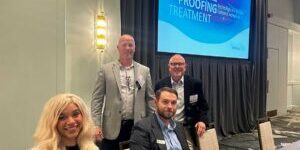
That was the idea behind our recent webinar, Alternative Marketing Channels for Behavioral Health and Substance Use Disorder (SUD) Providers. Three practitioners shared what’s working for them right now across directories, social media, and alumni networks. Here’s what stood out.
Redirect Your Weakest Ad Dollars to a Directory
One panelist made a simple case: The last 20% of an online advertising budget often costs the most and brings the lowest quality results. Consider moving that slice to a place where people are already comparing treatment options.
Recovery.com, for example, draws more than 1 million engaged treatment seekers each month and lists more than 25,000 centers. Advertisers pay per result, such as calls, verification of benefits (VOB) requests, form fills, and emails. While you should expect fewer leads than a search engine, the panelist said the leads should be better quality. That means less strain on your admissions team and a lower cost per acquisition.
The test for choosing channels is easy to run. Search the terms families use to find your level of care. If a treatment navigation site shows up, you should be on it.
A directory won’t replace the rest of your mix. You still need a business development team, a strong website, and Google Ads.
On Social Media, Show Up as a Person
One panelist shared his experience using TikTok Live to talk with people in real time. Viewers ask questions they might never ask in a formal setting. Those questions also reveal the language people use, which makes later content better. Providers using this approach have seen reach, engagement, audience insight, and, most of all, trust come out of it.
Credibility on social media takes work. As one panelist put it, “The algorithm doesn’t verify credentials before it distributes a video.” Some advice from panelists for how clinicians can be more reputable online:
- Explain nuance instead of making absolute claims.
- Say what you don’t know, and where to find the answer.
- Cite reputable evidence.
- Separate general education from personal clinical advice.
- Make your qualifications easy to verify.
One panelist said don’t feel as if you have to pick only one format. Short videos open the door. Long-form content gives people the depth to decide. Inspirational stories show change is possible. Educational content shows what it takes.
Hesitant to start? Pick the question you hear most in your clinic and answer it on camera. Production doesn’t need to be perfect. Content, however, does need guardrails around professional boundaries, clinical claims, and consent.
Another panelist added two content types that work for any team. The first is alumni stories, ideally from people at least a year past treatment. The second is answers to the questions your admissions team hears every day, like the difference between PHP and IOP.
Start Your Alumni Program at the Front Door
A good alumni program starts the moment someone walks through the door. One panelist said her organization has coordinators in its facilities who greet people in the lobby. Every alumnus gets a personal phone call within 30 days of discharge. A dedicated alumni app has more than 1,700 active members. It looks like a social feed, so it feels familiar.
The panelist calls their alumni a community, not a family. Everyone agrees to shared guidelines, including not posting personal contact details.
The team also doesn’t ask for testimonials. It invites people to tell their story. For example, one alumnus returned to thank a therapist, shared the experience publicly, and ended up on a talk show. No budget creates that, the panelist said. People shouldn’t feel like an acquisition channel, because they’re people.
Trust Equals Empathy Plus Authority
Panelists agreed on a framework: empathy (Do you understand me?) plus authority (Can you actually help me?). One suggested checking every section of your website against it. If a section builds neither, cut it. Pair every call to action with social proof, such as alumni testimonials, reviews, certifications, or accepted insurance.
Another panelist added a third question: Are you available to me? Understanding is just the baseline. At 2 a.m., people need a next step. One answer to this is a 24/7 call center and an always-on app.
Integrity Is a Marketing Strategy
Not everyone in this industry plays by the same rules and this, one panelist said, was one of the most frustrating parts of the field. However, bad actors tend to fall as fast as they rise, he said, so building trust is still the best long-term strategy. Some advice from panelists on building trust:
- Don’t use AI-edited photos.
- Don’t advertise programs you don’t offer.
- Get LegitScript-certified and accredited by the Joint Commission or CARF.
- Publish your pricing. Most centers don’t, and people notice.
- Measure and share your outcomes.
That same panelist’s directory holds itself to this standard. It has no hotline and no middleman. Ads are clearly labeled, and most listed centers pay nothing.
The Role of LegitScript Certification
One panelist called certification a partnership. Their directory vets every advertiser, requires LegitScript Certification, and covers the cost for advertisers. They handled certification personally at a past employer and noted that the information requested, including ownership, staff credentials, and licensure, is what any credible center should already have.
The practical reasons are clear. LegitScript’s Addiction Treatment Certification is the only third-party certification recognized by Google, Meta, Microsoft, and Nextdoor to vet addiction treatment advertisers. It also lets you bid on your own brand name, so competitors can’t take that space. Certification complements accreditation from CARF and the Joint Commission. It doesn’t replace it, because it measures compliance, not quality of care.
Three Easy Moves to Get Started
- Directories: Update your free profile on Recovery.com with videos and accepted insurance, then test 20% of your online ad spend.
- Social media: Open TikTok, tap Live, set your phone down, and start talking.
- Alumni: Send a newsletter. You already have everyone’s contact information, and free templates are easy to find.
Want the full conversation? Watch the webinar recording. If you’re ready to get certified, learn more about LegitScript Addiction Treatment Certification.
The full webinar recording is available on-demand.