
LegitScript noticed an increase in the sale of fraudulent document services, including fake IDs, synthetic identities, and artificial intelligence (AI) passport photo generators. Read further to understand how this trend appears to align with an emergence of more effective methods of stealing and fabricating identities.
Synthetic Identity Fraud Is the Fastest-growing Form of Identity Theft
According to the Federal Trade Commission (FTC), the fastest-growing form of identity theft is a new form of fraud referred to as synthetic identity fraud. Unlike traditional identity theft — where a criminal will steal the entirety of another individual’s identity — synthetic identity fraud occurs when a cybercriminal captures a single piece of personal data, or a combination of different individual’s personal data, and blends it with fabricated information to create an entirely new identity.
Merchants Offering Fraudulent Credit Profiles and Other Types of Fraud
Criminals will use personally identifiable information from children, the unhoused, and those who are recently deceased, as these individuals are unlikely to use their credit in the near future and therefore are unlikely to notice discrepancies in their credit scores. Additionally, they use synthetic identities to open and max out new lines of credit before they disappear — effectively washing their hands of the debts they accumulated.
Fabricated Identities Are Difficult To Track — Resulting in Large Amounts of Theft
Alternatively, cybercriminals will work to improve the credit associated with these identities by making small purchases and paying them off. They will then sell to those with poor credit for the purpose of obtaining loans or purchases in which good credit is required. Below is an image taken from a merchant identified by LegitScript to be selling credit profiles for the purpose of purchasing luxury apartments.
In addition to creating false identities, criminals have become more skilled in falsifying documents such as driver’s licenses, resulting in these fake documents becoming more difficult to detect by authorities. Fake licenses have a history of being sold as a way for minors or young adults to purchase age-restricted products or enter age-restricted venues; however, these fake licenses have recently become advanced enough to fool scanning devices used by law enforcement officers.
This is concerning as fake documents are no longer only popular among minors looking to purchase alcohol or tobacco; criminals may potentially utilize these documents for human trafficking or for travel across borders without being identified as wanted persons. As fake IDs become more advanced and harder to detect, it becomes increasingly difficult to catch these types of criminals.
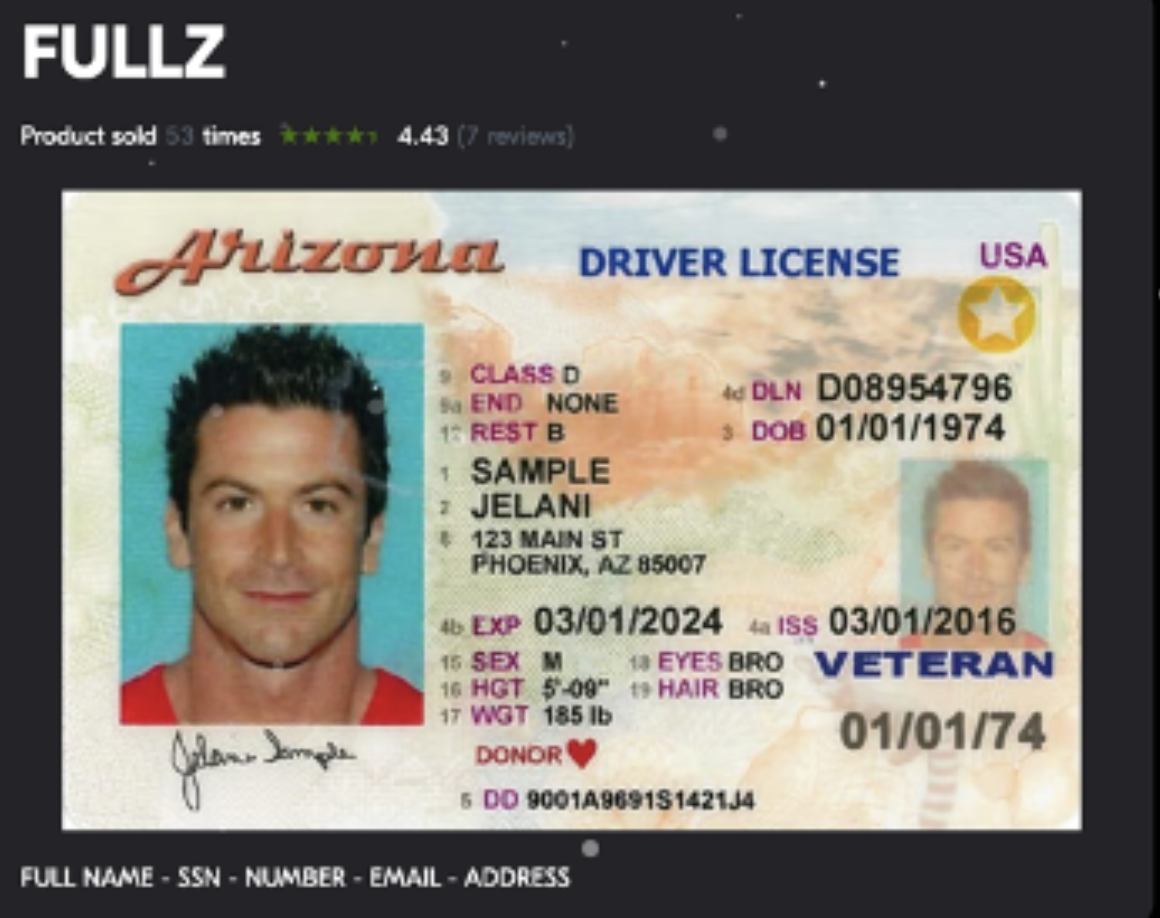
While fake IDs are nothing new, advanced technology and AI are making them more realistic than ever.
LegitScript Uncovered Fraudulent Identification
AI-generated passport photos use an emerging technology that has the potential to aid in the creation of these fraudulent documents. LegitScript has seen an emergence of merchants offering services in which consumers provide a photo and AI generates a new photo meant to be used in official passports. These alterations can include anything from removing backgrounds to changing the position of a person’s head. In most cases, alterations to passport photos — even for cosmetic reasons — is considered impermissible.
Currently, the British government is adapting ways of storing biometric data in passports to compare to passport photos and determine whether such photos have been altered. This scenario carries potential chargeback risk due to the sale of unusable photos. Despite the use of AI in the creation of passport photos currently being advertised as a way to streamline the process of obtaining a passport, this technology could be used to alter documents for criminal means such as creating fake IDs remotely.
LegitScript Merchant Monitoring Helps You Uncover Fraud
Evaluating new and emerging technologies and fraudulent activity while ensuring compliance with regulatory bodies spanning multiple jurisdictions is a challenge.
Contact us for a quick strategy session to see what LegitScript Merchant Monitoring can do for you.


