While fentanyl and other notorious drugs like cocaine and heroin may be top of mind regarding threats to public health, a potpourri of lesser-known products are posing increasing risks to consumers, payment processors, and online platforms. And they’re all surprisingly easy to get.
Read more about these “gas station highs” below and then download our new guide, Top 10 Problematic Products for 2026, for even more problematic products.

February 19, 2026 | by LegitScript Folks
What Are "Legal Highs"?
Getting a quick high may be easier than you think. Many of these cheap and accessible products are sold at gas stations, convenience stores, and head shops, but they are easily available online as well. They are often called “legal highs” because they mimic the effects of other illicit drugs but may not explicitly be designated as controlled substances. That doesn’t mean that these products are safe, nor that they are completely unregulated.
Because of their high-risk nature, complex regulatory frameworks, and potential for reputational harm, most payment service providers and online platforms decline to support “legal highs.” However, with the number of substances available and the variety of forms they can take, it can be difficult to know what these products are and what to look out for. That’s why it’s important for companies to remain vigilant to protect the integrity of their portfolios and platforms.
“Legal highs” can be stimulants, sedatives, or psychoactives. While the landscape of highs is constantly evolving, below are some of the most common products currently marketed and sold online and in stores.
7-OH
7-OH is a naturally occurring substance in the kratom plant that offers opioid-like effects but appears in only trace amounts. New products contain “enhanced” or concentrated amounts of 7-OH intended to generate a stronger effect on users. The Food and Drug Administration (FDA) has said that products with enhanced amounts of 7-OH are likely synthetically derived.
7-OH comes in a wide variety of forms: chewables, sublingual tablets, gummies, drink mixes, shots, and more. However, there are no FDA-approved 7-OH drugs, and 7-OH is not lawful in dietary supplements or in conventional foods.
While not a controlled substance at the federal level as of the publishing of this post, the FDA has issued warning letters to several companies for illegally marketing food and dietary supplement products containing 7-OH. Furthermore, states including California, Ohio, and Florida have banned the sale of 7-OH, and the FDA has recommended scheduling under the Controlled Substances Act (CSA).
The substance has the potential for abuse because of its ability to bind to opioid receptors. Public health agencies across the country have reported overdoses, in some cases fatal. FDA Commissioner Dr. Martin Makary recently said of 7-OH: “We got burned with fentanyl. We got burned with prescription drugs. We cannot get behind the 8 ball again. This may be the fourth wave of the opioid epidemic.”
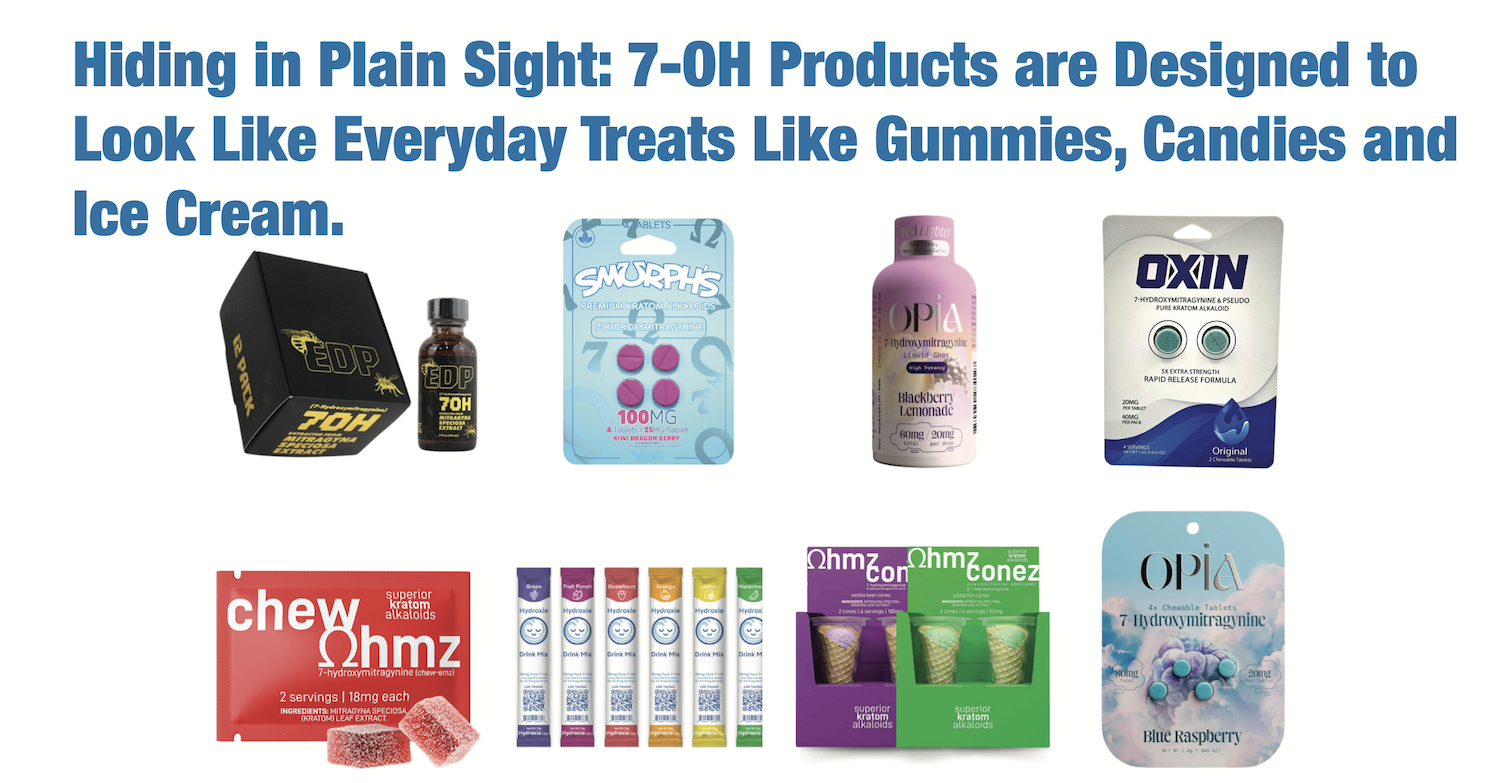
Consumer warning of 7-OH products via fda.gov
Tianeptine
Often called “gas station heroin,” tianeptine is of such growing concern that FDA Commissioner Makary penned a letter to draw attention to the quickly growing threat of the substance. While tianeptine has been licensed and marketed as an antidepressant in some countries outside of the US, it is not approved by the FDA for any medical use, nor is it generally regarded as safe in food or permissible as a dietary ingredient.
While not currently specifically controlled in the US under the CSA, there is a bill making its way through the Congress, the STAND Against Emerging Opioids Act, which would amend the CSA to provide for the scheduling of tianeptine as a Schedule III substance. Furthermore, the FDA and Department of Justice have repeatedly taken enforcement actions against sellers and importers of tianeptine products intended for human use. These have resulted in significant fines and jail time for those involved.
Tianeptine is used both recreationally and to self-treat conditions such as depression and anxiety. However, the FDA reports that misuse of tianeptine can cause a variety of symptoms, including hypertension, vomiting, tachycardia, coma, and even death. Furthermore, the rapid tolerance and dependence of tianeptine can cause severe withdrawal symptoms.
Unregulated tianeptine is often sold as tablets or in a liquid form as small shots. Common brand names include Tianaa, Zaza, Neptune’s Fix, Pegasus, and TD Red.
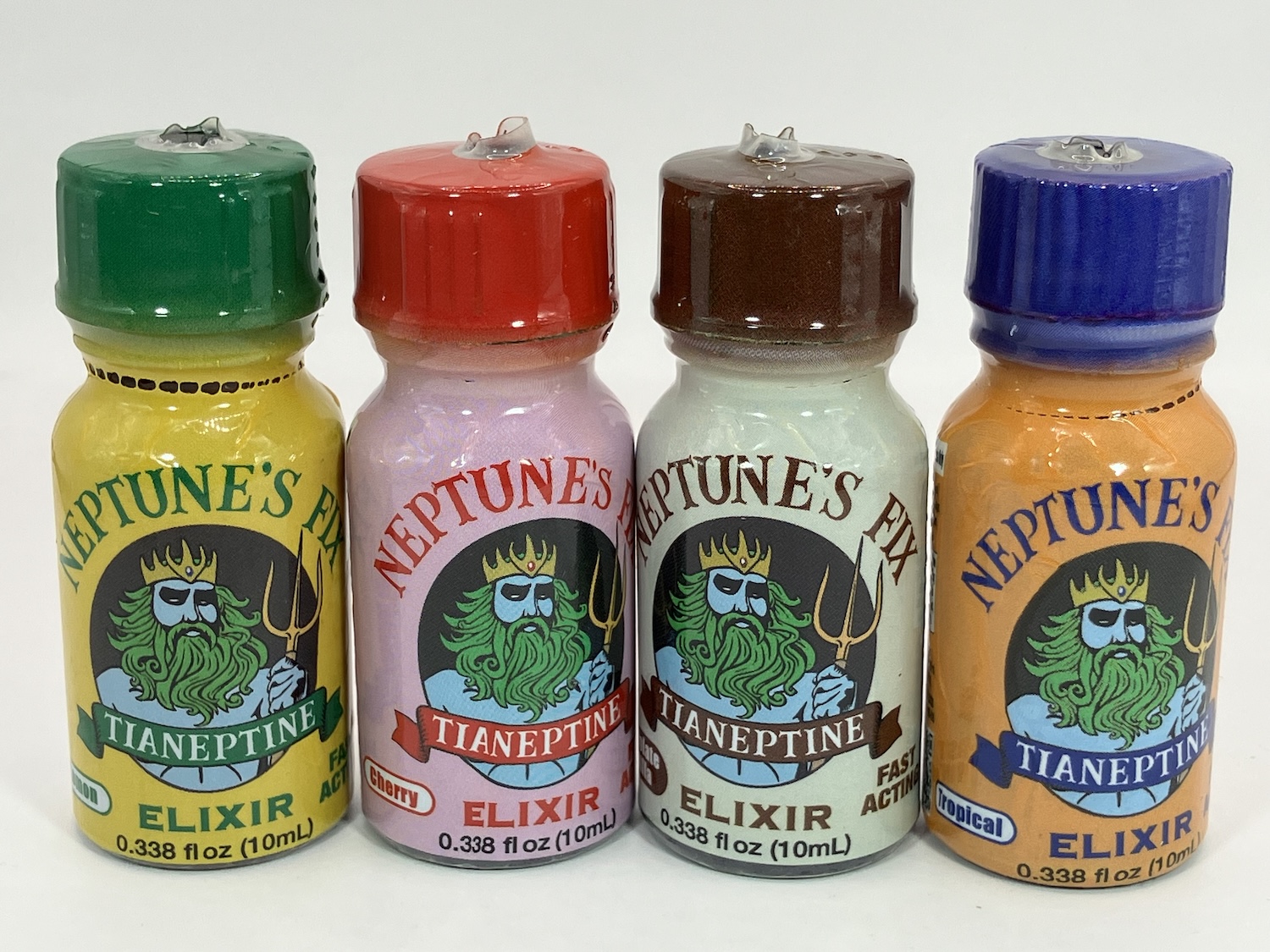
Tianeptine products via fda.gov.
Nitrous Oxide
Nitrous oxide, a colorless and odorless gas, is becoming increasingly popular around the world as a party drug that goes by many names: “laughing gas,” “hippy crack,” and “whippets,” among others. When used for recreation, nitrous oxide is often inhaled via a balloon, typically in combination with a “cracker,” a canister that holds the gas cartridge. It offers an intense but short-lived high causing euphoric feelings, hallucinations, and laughter. However, the FDA has recently warned about the risks of nitrous oxide abuse, including vomiting, paranoia, unconsciousness, a vitamin B12 deficiency, nerve damage, and even death.
What makes monitoring for nitrous oxide complex is that it has many legitimate uses. For example, it is well known as a medical anesthetic. In food preparation, it acts as a propellant in pressurized cans, such as whipped cream, and also serves as a preservative to keep these food products from going rancid. Because of its widespread applications, it can be difficult to know whether a merchant is selling nitrous oxide for legitimate or illegitimate purposes.
Since nitrous oxide is not classified as a controlled substance, many states — such as Connecticut, Florida, and Arizona — have passed legislation to regulate abuse, possession, sale, and distribution of the gas. At least one major e-commerce marketplace is involved in litigation based on allegations it ignored the health risks of nitrous oxide and allowed it to be sold on the platform.

Common nitrous oxide brands typically used for recreational purposes, via fda.gov.
Phenibut
Phenibut is a psychoactive product that, according to the Centers for Disease Control, was developed in Russia in the 1960s to treat anxiety, insomnia, and depression, but it has also gained popularity as a mood booster and cognitive enhancer. Also known as fenibut and phenigam, phenibut is often sold alongside dietary supplements and other nootropics such as racetams and adrafinil.
According to the World Health Organization, some consumers purchase phenibut to self-medicate withdrawal symptoms from opiates, benzodiazepines, and alcohol. However, the use and misuse of phenibut can, according to the CDC, result in sedation, respiratory depression, and reduced levels of consciousness. And despite its use as a withdrawal aid, phenibut itself can cause severe withdrawal symptoms such as anxiety, agitation, and acute psychosis.
While commonly appearing as a dietary supplement, the FDA has said that phenibut does not meet the definition of a dietary ingredient under the Federal Food, Drug, and Cosmetic Act (FD&C Act), and that any product containing phenibut labeled as a dietary supplement is misbranded.
Phenibut is most commonly sold as a powder or as tablets or capsules.
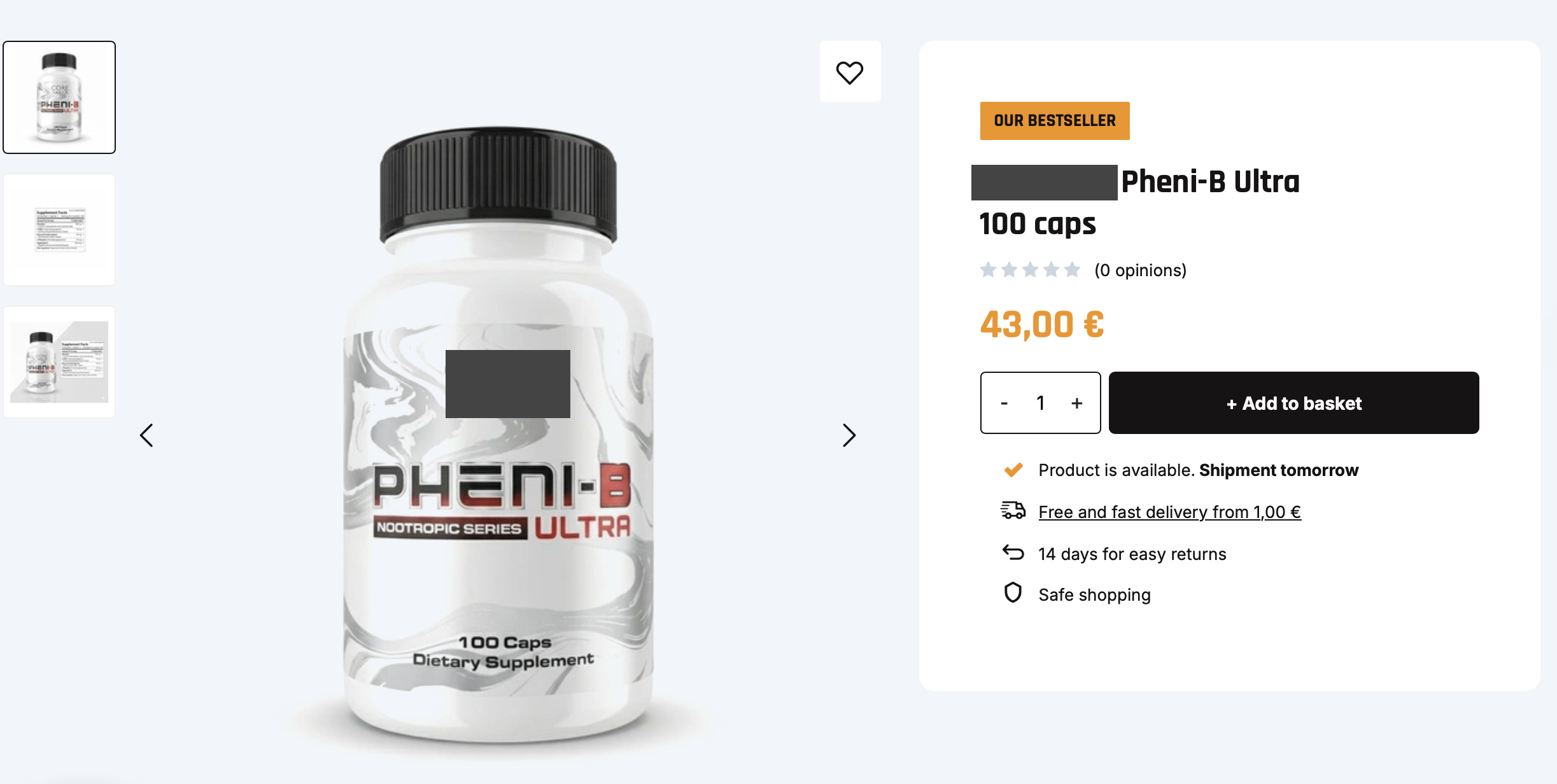
The FDA has said that any dietary supplements containing phenibut are misbranded.
Learn More
Problematic products are evolving rapidly, creating new compliance and consumer safety risks for payments companies and online platforms. LegitScript tracks trending products and helps payments companies and online platforms better understand and mitigate their risk.
Download our new guide on problematic products and then contact us to learn more about how we can help you navigate the risks of the commercial internet while growing your business.
Top 10 Problematic Products for 2026
Built for risk, compliance, and trust & safety teams, this resource helps organizations strengthen detection strategies, protect consumers, and stay ahead of emerging product risks in an increasingly complex regulatory environment.